Títin Moreira
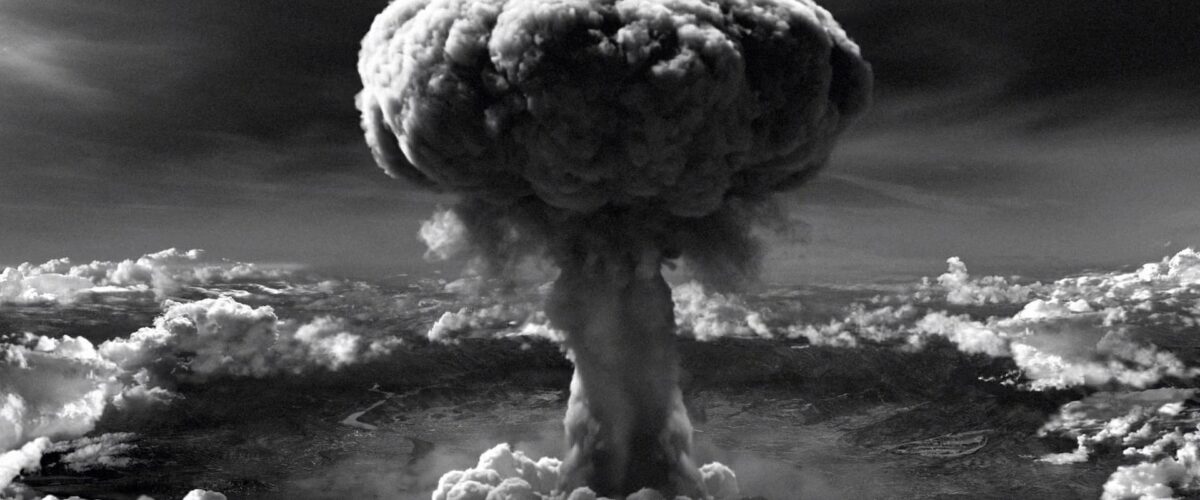
On August 6, 1945, the United States dropped the first atomic bomb on a population. In a second, 80,000 men, women, and children died. Many more died in the following days, agonizing with terrible pain from burns and radiation.
The energy contained in the nucleus of an atom could be released and controlled. It was a huge scientific breakthrough, both for medicine and energy. But its first use was destruction, massacre, carnage — in a war that had already cost more than 60 million lives during the long Second World War.
By May 1945, Berlin had already fallen, and the Third Reich was a horrific memory of its crimes against humanity. Fascist Italy had collapsed earlier. In Europe, the Allies had triumphed.
But in the Far East, Japan — the ancient empire and major industrial, military, and financial power — resisted.
The Soviet Union had promised its imperialist allies that it would attack Japan three months after Germany was defeated.
With the outcome of the Second World War already decided, the victorious side met at the Yalta and Potsdam Conferences to outline what the postwar world would look like.
One fact was evident: the United States wanted to be the hegemonic power in the world, as England had been in the 19th century. Germany was defeated, and dividing that country to prevent new challenges of supremacy or domination was simple. England and France, the other two European powers, had been devastated, and their imperial weakness was clear.
However, the Soviet Union — despite the more than 20 million deaths it suffered in the war — had entered Berlin as a victor. The Americans distrusted the interests of Stalinism, although it had already shown its spirit of coexistence with the imperialists and had blocked or betrayed revolutionary processes around the world. Big capital feared that the revolutions unleashed in Europe after the First World War might repeat themselves, so they had to be diverted and controlled if they occurred.
The United States needed to show its allies who was the undisputed master of the world. Japan was already defeated. According to the agreement, on May 8 Soviet troops would invade Manchuria, a Japanese colony on the continent. If Japan surrendered to Soviet troops, the United States would face a problem.
So they decided to hasten the launch of the atomic bomb to August 6, on the defenseless population of Hiroshima, a city of 250,000 inhabitants. It was the greatest terrorist attack in history.