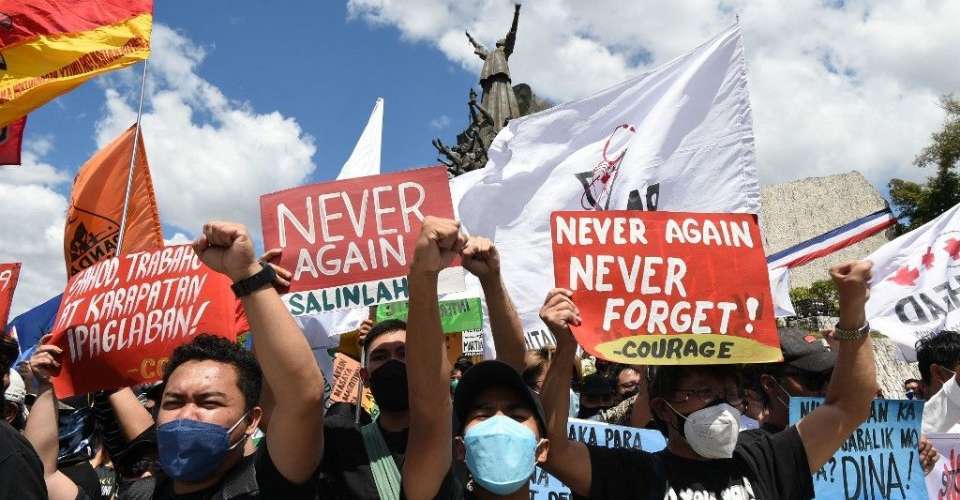
In 2025, tens of thousands of people took to the streets of Manila and other Philippine cities in one of the largest demonstrations in recent years. The trigger: a massive corruption scandal in infrastructure projects meant to mitigate flooding, revealed after a series of natural disasters that devastated entire communities — disasters that could have been foreseen.
In Manila alone, nearly 50,000 people responded to the call of student groups and activists to march. Police repression was swift, and more than 200 protesters were arrested.
The Philippines is one of the most vulnerable countries in the world to natural disasters. Each year, it faces more than 20 typhoons, floods, and torrential rains that especially affect the poorest communities. In response, the State had announced billions of dollars in flood-control projects.
However, a recent investigation — backed by official data and civil organizations — revealed that much of that money was diverted, embezzled, or assigned to “ghost projects.”
Many works do not even exist; others were built with extremely poor-quality materials or awarded without transparent bidding.Heavy rains in September caused severe flooding in regions supposedly protected by those projects. This time, the disaster was not only natural.
Citizen reaction was immediate. Students, workers, artists, and indigenous groups poured into the streets. The protests were massive; in some sectors of Manila, police repression was met with burning barricades and dozens of arrests.
The 2025 protests were the visible expression of a deeper crisis. The perception that the system protects the powerful and punishes the weak has taken root.
The protests echoed indignation over alleged government corruption and inequality in other parts of Asia, including Nepal, where a protest movement led by Generation Z toppled the government this month, and Indonesia, where demonstrations recently erupted over privileges granted to legislators.
The marches in the Philippines were not only against corruption: they were a collective cry of exhaustion at decades of impunity, inequality, and broken promises. They are also a reminder that natural disasters, in contexts of governments that favor businessmen and local elites, become social catastrophes.