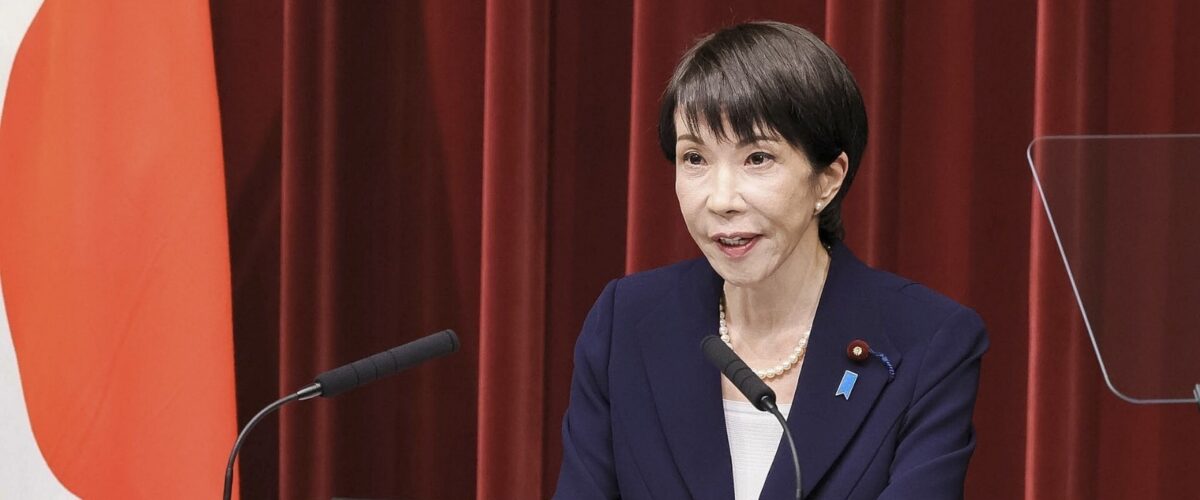
Just about five months ago, Japanese Prime Minister Sanae Takaichi was riding high. In a move the New York Times described as rescuing the country’s ruling Liberal Democratic Party (LDP) back from the abyss, Takaichi used a snap election to secure a record 316 seats in the National Diet (the country’s national legislature) for her party.
Takaichi herself boasts one of the highest approval ratings of any world leader. This remains the case as the National Diet’s first session of 2026 (and the first with LDP’s supermajority) comes to a close. There are, however, signs that Takaichi’s support is not guaranteed. Some polls released in July show her approval rating has dropped by up to ten points. The decline comes as she has struggled to address cost of living concerns in Japan.
Japan’s first ever woman prime minister, Takaichi contrasts the image of stale old men which many Japanese people had come to associate with the LDP. Media-savvy and perceived as dedicated to serving the Japanese people, she was able to reach young sectors of society that LDP had previously been unable to connect with. This is all part of what fueled Takaichi’s rise. But another key part was her political and economic agenda.
Japan has been in a prolonged economic crisis, with the yen reaching a 40-year low in value at the start of July. Takaichi was elected in part due to her bold economic promises. While there has been some debate, Takaichi is generally seen as a Keynesian politician who aims to stimulate the Japanese economy through major investments in key industries tied to advanced technology and the defense industry, favoring multi-year budgeting over single-year budgets. She has further promised to relieve consumer costs by lowering Japan’s 8 percent tax on food sales to just 1 percent.
Elected largely due to her economic promises, Takaichi has been unable to pass much of this agenda, even with her party’s supermajority. Instead, she has had to rely on intervention from the United States, which stepped in late last week to prop up the yen.
Whether or not this intervention succeeds in stabilizing Japan’s economy, it signals the Japanese government’s own inability to address the issue most impacting Japanese workers. It also further reinforces Japan’s subordination to the United States at a time when the United States is increasingly weak and unable, or unwilling, to act as a reliable ally, even to its most sycophantic partners.
Takaichi’s Push to Militarize Japan
Takaichi has, however, been moving forward with another pillar of her political agenda: Japanese rearmament. This has been a goal of the LDP since its founding. The party, established during the U.S. military occupation of Japan after World War II — in fact the U.S. occupation government helped the LDP take and maintain power to approve U.S. bases and serve as a bulwark against class struggle and communist movements in Asia — has long sought to revise Japan’s Pacifist Constitution which enshrines in writing Japan’s rejection of war as a right of the country.
For several decades Japan has been building a conventional military, despite the restrictions of the Pacifist Constitution. But Takaichi has leaned on reactionary nationalist sentiments within Japanese society, as well as China’s more aggressive role in the region, to justify an unprecedented leap in militarism, such as ending a ban on the export of lethal weapons and establishing a centralized intelligence bureau. Japan has also been deepening its military cooperation with the United States and the Philippines, with the country now serving as a key part of Trump’s military vision for U.S. force projection in the Asia-Pacific by building up forces along the First Island Chain.
The remilitarization of Japan comes as China has rapidly expanded its military and acted more aggressively in the Pacific. Tensions between the two East-Asian powers have flared up as a result of both Takaichi’s and Xi Jinping’s aggressive agendas. In recent years, the Japanese military has transited the Taiwan Strait, a provocative move that Takaichi has publicly defended, sparking a diplomatic crisis between Japan and China.
There is nothing benevolent about China’s rise in the region. The miserable conditions of the Chinese working class and the government’s oppression of national minorities clearly show that it is not a positive alternative to U.S. or Japanese imperialism. But Takaichi’s warmongering, which relies on sinophobia that doesn’t distinguish the Chinese working class from Chinese capitalism, only weakens Japanese workers by preparing them to go to war with their class siblings instead of uniting in struggle against capitalism.
The Need for a Strong Japanese Left
Takaichi’s militaristic policies, marked by xenophobia and reminiscent of Japan’s imperial history, have broad support. But even these have been confronted. With young people at the forefront, tens of thousands have protested her efforts to revise the constitution, making them some of the country’s largest protests in recent history. These youth sectors of the anti-war movement have also connected the fight against rearmament to other progressive causes including LGBTQ+ and women’s rights and opposing the country’s rising xenophobia in favor of an internationalist perspective.
The emergence of a stronger Left which can confront Takaichi and the broader right-wing political landscape that brought her to power would be one of the most progressive developments for the region given Japan’s own imperialist position in global capitalism as well as its role as one of U.S. imperialism’s most consistent partners in the region. While China’s aggressive moves in the region should not be glossed over, it would be absurd to believe that the United States or Japan — both of which have committed numerous atrocities in East Asia — have any right to militarily dominate the region themselves.
Part of the legacy of the LDP and U.S. imperialism was that they worked together to crush the emergence of a more militant labor movement in Japan. This, along with a cultural aversion to public protests and open political exchange, makes the growth of a socialist movement in Japan difficult. But there are already signs that Takaichi’s right-wing agenda will be unable to resolve the crises that Japanese workers face.
Meanwhile, young Japanese people are showing an interest in progressive and even Marxist ideas. If they can connect with other Left and working-class sectors throughout East Asia this can further develop the emergence of a strong Japanese Left. From CRP Asia, we hope to contribute to the spread of Marxist ideas and left-wing movements in Japan and open our pages to those in the country who want to resist Takaichi and the reactionary LDP, kick out U.S. imperialism, and unite Asia’s working class against all capitalist powers that offer nothing but division and misery.