André Barbieri and Esteban Mercatante
This document was discussed at the fourteenth conference of the Current for Permanent Revolution – Fourth International (CPR-FI) that took place in December in São Paulo, Brazil.
***
1. The Crisis of the “West” and the Challenge of China
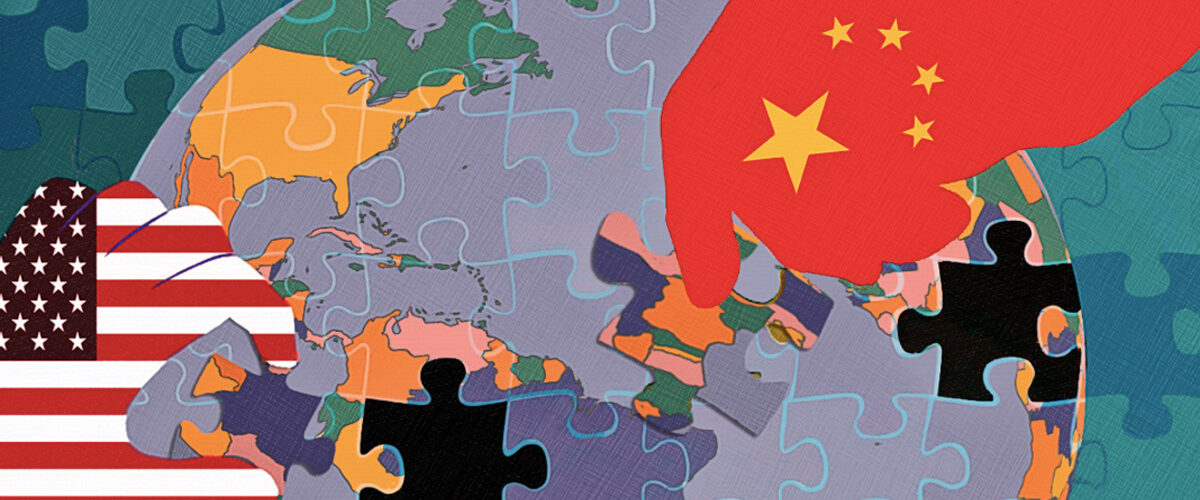
China has become a prominent player in the international capitalist system. Together with the United States, it is one of two poles in the global economy, which is now increasingly fragmented thanks to geopolitical insecurity, “strategic decoupling,” protectionism, and tariff conflicts. These are signs that we are approaching the end of the neoliberal era, which was characterized by the relatively harmonious integration of economies and global value chains over the more than three decades since the Cold War. The old world order, dictated by U.S. unipolarity, is in crisis, marked by the hegemonic decline of U.S. imperialism and fractures within the traditional “West,” now disrupted by Donald Trump’s policies and his disregard for traditional transatlantic alliances.
As this crisis-ridden period evolves, China has emerged as a formidable power, now the world’s second-largest economy and possessing the second-largest military budget. It has transitioned from being a mere recipient of foreign capital and direct investment to competing for capital accumulation among weaker states. Consequently, China’s rise positions it as a key player in the dilemmas posed by the capitalist crisis and as a repository for its effects. President Xi Jinping’s China is, more than ever, shifting the most explosive contradictions of the economy and the global class struggle to the foundations of its national structure.
This transformation has significant implications for the capitalist system. Most importantly, China is becoming an influential — and decisive — player in the dispute over who will bear the costs of neoliberal globalization’s exhaustion. Given the absence of significant new avenues for capitalist accumulation — akin to China’s situation after its reintegration into the sphere of surplus value extraction in the 1990s — and the fact that, in the wake of the Lehman crisis, state bailouts have left companies economically weakened and unwilling to invest, the tendency toward geopolitical friction with military implications is becoming increasingly evident, even if it has not yet escalated into a global conflict.
In this dynamic, the United States remains the primary imperialist power within the global capitalist system, while China assumes an unprecedented role in the distribution of global resources. The war in Ukraine, a pivotal moment for questioning the dominance established by globalization, has allowed China to gradually advance its “revisionist” challenge to U.S. unipolarity. In this conflict, both the United States and China, without deploying troops on the ground, have pursued their policies through alternative means: the United States, under NATO command, has fought to preserve the unipolar order that emerged from the Cold War while subordinating the capital of Russia and China. Meanwhile, China has strengthened its alliance with Moscow, albeit in an increasingly asymmetrical relationship, given Russia’s dependence on China after its break with the West — an asymmetry that breeds resentment in Moscow. China does not seek to subvert the capitalist economic system that underpins this order; rather, it aims to improve its position within it.
At the same time, China continues to pursue the technological and military conditions necessary to expand its challenge to U.S. supremacy in matters of global importance. While it is true that China’s rise has disrupted the previous pattern of unchallenged U.S. dominance, China is starting from a relatively backward position compared to that of the established powers. These discrepancies in the pace of development are fundamental to understanding the relative scope and limits of China’s ascent, which has produced contradictions that can be resolved only through interstate disputes and international class struggle.
Today, capitalist China operates under the Bonapartist single-party regime of the Chinese Communist Party, which has survived the capitalist restoration and manages its effects. China’s sui generis capitalist model differs significantly from traditional Western models, being influenced by “state dirigisme” and the conditions of the genesis of the restoration, which absorbed the achievements of the 1949 revolution. The CCP has retained control over some strategic economic sectors (energy, telecommunications, transportation, finance) while positioning its state apparatus to promote the law of value and the international projection of its domestic capital. Although state ownership still holds influence, it is diminishing in proportion to the growth of the private sector. The country remains a global manufacturing center, thanks to the iron discipline of its colossal working class. Without systematic repression and coercive discipline in production centers, and by denying any attempts at worker organization, it would be unthinkable for the CCP to maintain its industrial system.
The unique basis of China’s transformation from a country with a colonial history to a capitalist superpower, which is now beginning to alter the internal dynamics of the most fragile nations, lies in the absorption of the achievements of the 1949 revolution through counterrevolution. Without this absorption, such a leap would have been unthinkable. The revolution unified the country, established a strong sovereign state for the first time in its history, lifted millions of workers out of poverty through education and discipline, achieved high literacy rates and life expectancy, created mechanisms of economic control (albeit bureaucratic ones), and nationalized strategic industrial assets — all within a relatively decentralized institutional framework that allowed for provincial autonomy. Born with bureaucratic deformities, the People’s Republic did not promote direct democratic bodies like the Commune or the Soviet councils, nor did it seek to expand the achievements of 1949 internationally. Isolation and backwardness, exacerbated by the global regression of workers’ gains — the fall of the Berlin Wall and the dissolution of the Soviet Union — unleashed forces that would ultimately reintegrate China into global capitalism.
The phase of capitalist restoration began with Deng Xiaoping’s reforms in the late 1970s and accelerated throughout the 1990s, culminating in China’s entry into the WTO in 2001. This was preceded by Beijing’s rapprochement with Washington, initiated by the Nixon-Mao summit. China became a crucial link in global value chains thanks to its massive, cheap, and skilled labor force, whose mobility within the country was strictly controlled by the CCP. This control enabled the rapid provision of tens of thousands of workers to companies in the Special Economic Zones, where export-oriented production was concentrated. Thus, China emerged as the great “factory of the world.” Its integration into global capitalism was fundamental to the international offensive of capital against labor, forming a neoliberal cycle that began in the 1980s and dismantled labor gains across both imperialist and peripheral countries while transnational corporations increased their profit margins.
During the neoliberal period, China and the developed (imperialist) capitalist countries maintained a symbiotic relationship. In particular, during the early 2000s, the term “Chimerica” was coined to describe the close ties established with the United States. Yet this relationship was never without tensions. After the Tiananmen Square massacre in 1989, relations cooled, and tensions peaked during the Kosovo War, when a NATO missile struck the Chinese embassy in Belgrade. Nevertheless, these incidents were isolated within an otherwise cooperative relationship.
After the Great Recession, a new dynamic began to emerge in China’s relations with the United States and other major powers. From the U.S. perspective, the idea that China posed a threat to its dominance gained increasing traction. The acknowledgment that the U.S. Treasury depended on China’s purchase of bonds to finance itself clearly demonstrated the Asian giant’s economic strength. This fueled a growing debate among U.S. strategists about how to respond to the “Chinese threat,” with widely differing positions among them, as illustrated by the contrasting views of John Mearsheimer and Henry Kissinger.
Obama’s “pivot to Asia” manifested through increased military deployment in Southeast Asia and the pursuit of the most ambitious free trade agreements to date: the TTIP and the TPP. Under Trump, the goal of containing China translated into substantially different policies, leading to a “trade war” amid heightened competition, particularly in technology. In terms of security, the push for the Quad alliance — comprising the U.S., Japan, Australia, and India — was one of the most obvious demonstrations of strength in response to China’s rise. Trump authorized record arms sales to Taiwan and promoted naval voyages through the Taiwan Strait, which have since become routine. Biden has been even more aggressive in restricting China’s access to critical technologies, such as semiconductors, while also promoting regional security alliances in Southeast Asia against China. In 2021, AUKUS, the strategic military alliance between Australia, the United Kingdom, and the United States for the Indo-Pacific region, was established.
From China’s perspective, the 2008 crisis confirmed the fallibility of Western capitalism and marked its moment to emerge as an “alternative model” of governance and economic outlook under the guise of “socialism with Chinese characteristics,” which is a euphemism for the type of unbridled capitalism prevalent in China under the state domination of the CCP. In response to Obama’s “pivot to Asia,” Xi introduced the concept of a “new type of major-country relationship.” This shift in China’s global posture was complemented by the idea of a “community with a shared future for mankind,” emphasizing that Chinese leadership intends to play a positive and constructive role in global affairs. This has revived discussions about so-called benign multilateralism under Chinese leadership, influencing public debates among populist, neoreformist, and “progressive nationalist” sectors that identify with the notion of the “Global South.” This spectrum of opinions has been the subject of debate in many FT-CI materials, consistently approached from an anti-imperialist and independent perspective toward all capitalist states.
Although majority state ownership was maintained in some strategic sectors and the deregulation of the financial sector was limited, leaving the state with several levers for active intervention in economic planning, the emergence, presence, and consolidation of a strong private sector expanded. This private sector received abundant benefits, enriching itself as it adapted to state objectives. The Chinese working class led many struggles and resistance movements against the effects of the restoration and strengthening of the private sector, ranging from rural struggles in the first decade of the 2000s against Hu Jintao’s land expropriations to a wave of strikes in the automotive and electronics industries in Guangzhou during the 2010s. Although class struggle has been present, it has not yet reached the threatening intensity it had during the Tiananmen Square uprising, when the student revolt was followed by the entry of the working class. Government repression, which intensified significantly during the Xi era, hindered these movements, increasing the already-considerable obstacles to worker organization in the workplace. Yet new movements may be generated by the slowdown in the Chinese economy, the crisis in the real estate sector, overproduction issues in industry, high youth unemployment, and the desire for greater democratic rights. In a country like China, such movements will inevitably involve sectors of the working class.
In considering why China has become more assertive, one cannot ignore the tensions that rapid development generates in any society. These tensions can have destabilizing effects, which could be the Achilles’ heel of Chinese capitalism. The intensification of international rivalries may exacerbate these destabilizing effects, leading to serious internal consequences in the social and economic spheres — open-ended processes that could alter the trajectory of Chinese development.
The rivalry between the United States and China has intensified without qualitatively changing the extreme economic interdependence between the two nations. The United States remains China’s main consumer market. While the U.S. has the second-largest manufacturing sector in the world, accounting for 13 percent of global production, China accounts for more than double that, at 35 percent. Therefore, although Donald Trump’s tariff measures during his new term sometimes threaten to cause a drastic decoupling, such a course is difficult to sustain. We must consider the challenge posed by China and the debate over its role in the global system, taking into account the historical peculiarities imposed by the internationalization of production in the 21st century.
2. China in the Concert of Powers
A series of quantitative dimensions will help us situate China within the international hierarchy. These dimensions provide insight into the material strength accumulated in China’s socioeconomic formation. Taken together, they reveal overwhelming progress, in which China has, in many respects, far surpassed several imperialist powers (in many cases, all of them, with the exception of the United States).
2.1 GDP and place in world trade: The Chinese economy today is equivalent to two-thirds that of the United States, according to estimates from the International Monetary Fund (IMF). But when adjusted for purchasing power parity (PPP) to account for currency depreciation, China’s gross domestic product (GDP) is one-third larger than that of the U.S.
The peculiarity of China’s economy lies in its large size, which coincides with a sharp decline in per capita production, placing it in the middle of the global rankings. The IMF ranks China 72nd, with a GDP per capita (measured in PPP) at just 30 percent of that of the U.S. On this metric, Argentina and Chile outperform China, highlighting the productive disparities within the Asian giant, where centers of capital accumulation supported by advanced technology in coastal cities coexist with much more precarious and uncompetitive conditions.
China’s growing importance as a trading partner is directly related to its production volume. The rapid internationalization of production since the 1970s was organized around the United States as the main destination for finished goods, since it had the largest market in terms of purchasing power. This dynamic changed dramatically with the rise of China. By the end of the last decade, China was the main trading partner for 128 out of 190 countries, while the United States remained the primary trading partner for only 30 percent of these nations. The graph below illustrates this growing importance.

China’s preeminence is primarily explained by its role as a supplier of industrial goods. With nearly 40 percent of global production concentrated in China, there are often no manufacturing alternatives outside its factories. Even among products assembled in other countries, they rely on components sourced exclusively from Chinese manufacturers.
2.2 Labor productivity: There has been a significant leap in China’s productivity, although a substantial gap remains compared to global levels. China’s transformation into the world’s manufacturing hub has been accompanied by a remarkable increase in productivity. From 1990 to 2025, productivity per hour worked in China increased 15-fold. During the same period, the United States did not even double its productivity. Yet, despite this leap, the United States currently has four times the hourly productivity of China and three times the per capita productivity. These figures can be somewhat misleading, since the calculated value added includes the share that U.S. multinationals appropriate from production generated in their global value chains in other regions and countries, including China. Nonetheless, this data reflects the paradoxes inherent in China’s uneven and combined development, given that the country encompasses several “Chinas,” each with very disparate productive realities.
2.3 Leading companies: A few years ago, China surprised everyone by surpassing the U.S. in the number of companies included in the Fortune Global 500 ranking. In 2024, however, the U.S. reversed this trend, surpassing China with 139 companies among the 500 largest, six more than the Asian giant. In 2025, U.S. leadership was reaffirmed, with 138 companies among the world’s largest, compared to 130 based in China. Together, these two countries account for more than half of the ranking. In China’s case, some companies enter the ranking thanks to their size within the country rather than their international presence. Nevertheless, this clearly indicates the position of Chinese corporate giants.
2.4 Internationalization of the renminbi: One paradoxical expression of China’s uneven and combined development is the difficulty it has faced in creating a national currency that is widely used outside its borders. As a country’s currency gains international acceptance, the scope for economic policy-making expands. The United States’ currency is by far the most widely used for transactions, as a reserve currency for central banks, and for issuing various financial assets. The U.S. leverages these benefits to maintain large deficits in its external balance of payments. What would be impossible for any other country to finance, the United States achieves thanks to the dollar’s widespread use. In this area, China significantly lags behind other countries.
The U.S. Federal Reserve (Fed) compiles an indicator of currency use, which is a weighted average of each currency’s share of globally reported foreign exchange reserves (25 percent weight), the volume of foreign exchange transactions (25 percent), the use of each currency in foreign currency debt issuance (25 percent), foreign currency assets in international banking (12.5 percent), and foreign currency liabilities in international banking (12.5 percent). What we observe is that the remarkable growth of China’s commercial influence has not been matched by an equivalent increase in the international role of its currency. The Fed reports that the dollar accounts for 65 percent of the total, the euro for 24 percent, and the renminbi for 3.1 percent. While it is true that Beijing has been more successful in increasing the number of transactions without using the dollar in commodity trading, this has not diminished the dollar’s primacy in transactions, nor its relative share of currencies used as reserves, nor its role in sovereign debt markets.
2.5 Foreign direct investment: Another example of economic power is the international expansion of companies through foreign direct investment (FDI). While capital export was once exclusive to imperialist countries, many “emerging” and “developing” countries now also export capital, meaning their residents make foreign direct investments. Consequently, the hierarchy among countries today is not based solely on whether they export capital but on how much of it they export and their net balance of exported and incoming capital. Here, we can see China’s extraordinary expansion, which has taken place in just 20 years.
China has long been a magnet for FDI and remains so today. Yet it has also emerged as a competitor in the global investment landscape.
In 2013, China implemented its New Silk Road initiative, which involves several infrastructure projects — such as roads, ports, and railways — financed with Chinese capital. Additionally, Chinese companies have sought acquisitions worldwide, targeting firms in both dependent nations and other imperialist countries. This expansion has raised concerns among governments regarding the geopolitical implications of certain acquisitions that grant China access to key technologies. In 2024, China, excluding Hong Kong and Macao, generated the third-largest flow of FDI in the world, trailing only the United States and Japan. If we combine FDI from China and Hong Kong, it becomes the second-largest generator of FDI.
As a recipient of FDI, China ranks fourth, behind the United States, Singapore, and Hong Kong. When China and Hong Kong are combined, they rank second, surpassing Singapore. This reflects China’s prominent position in global value chains and the attractiveness of its market. Amid a turbulent international landscape, FDI directed to China fell by 30 percent last year, contrasting with the United States, whose FDI increased from $230 billion to $279 billion. In terms of accumulated FDI capital abroad, China currently ranks third, behind the United States and the Netherlands. But if we add Hong Kong, China’s accumulated FDI capital exceeds that of all of Europe. Only the United States ranks higher.
China thus stands out as a key player in the international movement of production-oriented investment, both in terms of the capital it attracts and its role in global investment competition. China’s FDI stock was only 0.3 percent of the world total 25 years ago but now stands at 7.1 percent. China is clearly a protagonist in two fundamental areas of imperialist operations: it extracts surplus value beyond its borders, and it participates in international valorization networks.
2.6. Exploitation of labor and natural resources: China has been increasing its international presence with a substantial volume of capital exports, competing with “Western” powers for niches of capitalist accumulation in weaker countries. The international projection of its large corporations highlights the increasingly evident imperialist features of the Chinese capitalist state.
To boost the semiconductor, robotics, and data center industries essential for artificial intelligence, China needs electricity. Since 2018, Chinese state-owned companies have eagerly ventured into the electricity sectors of dependent countries, particularly in Latin America. In Chile, China Southern Power Grid International acquired 28 percent of Transelec, an electricity transmission company, while the State Grid Corporation of China purchased Chilquinta, a local electricity distributor in Valparaíso, and Compañía General de Electricidad, Chile’s largest electricity distributor. As a result, the Chinese state-owned company now owns two of Chile’s four electricity distributors, controlling 57 percent of distribution and covering the entire northern part of the country. In Peru, China Southern Power Grid acquired Enel in 2023, along with China Yangtze Power International, a company controlled by China Three Gorges. This means that all electricity distribution in the Lima metropolitan area, home to 10 million inhabitants, and more than half of Peru’s territory, is now under the control of Chinese companies. From 2007 to 2022, China invested US$32.5 billion in the Brazilian electricity sector. State Grid, which won the largest auction of electricity transmission lines in Brazil’s history, is responsible for supplying power to 60 million people in Brazil. Together with State Power Investment Corp., it has constructed thousands of kilometers of Chinese-owned transmission lines that transport electricity produced in the Northeast by wind, solar, and hydroelectric plants to the Midwest. This involvement in the energy networks of the most vulnerable countries significantly alters aspects of their national economies and must be considered in the programmatic approach to addressing Latin America’s double dependency.
Mineral extraction is crucial as a material substrate for cutting-edge technologies, including semiconductors, the Internet of Things, and artificial intelligence. When focusing on the strategic minerals directly involved in electric battery production — lithium, cobalt, and graphite — China occupies a prominent position compared to its global competitors. It processes over 90 percent of the world’s graphite and is responsible for more than two-thirds of the world’s cobalt- and lithium-processing capacity. Chinese companies have made significant investments in various mining and extraction projects in Argentina, granting them access to the Lithium Triangle, an area spanning Argentina, Bolivia, and Chile that holds 50 percent of the world’s lithium. This situation has led to conflicts with indigenous communities, which often face oppressive policies from local governments influenced by U.S. and European multinationals.
In Ecuador, where China operates mining companies in the “Copper Belt” (such as Mirador and San Carlos-Panantza), indigenous communities like the Shuar resist environmental destruction and the expropriation of their ancestral lands. Furthermore, Chinese companies account for 80 percent of cobalt production in the Democratic Republic of Congo, where over half (60 percent) of the world’s cobalt production is concentrated. In Congo, companies such as the CMOC Group (China Molybdenum Company) and Sicomines, alongside imperialist firms like the Anglo-Swiss Glencore, are responsible for a series of human rights violations, including forced evictions, labor exploitation (including child labor), and thousands of deaths from workplace accidents. Mining strikes, often involving Chinese capital, are typically linked to low wages, hazardous working conditions, and inadequate compensation. Strikes over long hours, low pay, and poor conditions have occurred in Zambia and Zimbabwe, where China has investments in copper and lithium. Recently, mining companies like Heijin and Tsingshan Group Holdings have been accused of forcibly removing indigenous communities from their ancestral homes in Zimbabwe, reflecting similar issues already highlighted in Latin America. This has sometimes led to protests with anti-colonial sentiments advocating for indigenous rights.
Consequently, China has emerged as a major extractive power, plundering regions such as Africa, Latin America, and Southeast Asia, exploiting labor and constructing essential infrastructure to facilitate its capital penetration — such as ports and transport networks for coastal settlements, including the Port of Chancay in Peru, which is set to become the largest commercial port in Latin America under Beijing’s control. Chinese extractivism feeds back into its industrial-military machinery, mirroring the phases experienced by major imperialist powers during their growth as metropolises that absorbed raw materials to boost their capital globally.
Infrastructure projects along the New Silk Road represent another form of intervention in national economies and are integral to Beijing’s objectives. They enhance China’s influence over dependent countries while allowing it to offload excess productive capacity. A total of 146 countries are involved in the initiative — 53 in Africa and 22 in the Americas — encompassing all continents. The issue extends beyond what is commonly referred to as the “debt trap,” in which host countries are compelled to cover construction costs. China gains political leverage over weaker nations, particularly in Africa, but similar trends are evident in Latin America, as seen in Peru’s Port of Chancay. For instance, China has financed and constructed new parliamentary buildings in 15 African countries, including Lesotho, Zimbabwe, and Malawi, as well as the African Union building in Ethiopia. Many of these “gifts” come with restrictive conditions, such as cooling relations with Taiwan, enabling Chinese companies to secure contracts, reducing labor law oversight on projects of Chinese interest, and relaxing environmental regulations.
The Silk Road initiative is also accompanied by security agreements. Nearly 40 African countries maintain some kind of relationship with Chinese security agencies, including Egypt, Tanzania, and Nigeria. These agreements encompass the protection of Silk Road assets — primarily infrastructure elements like ports and railways that Beijing uses to project its capital internationally — as well as training programs for security forces and armed forces in these countries. In fact, Mozambique, Namibia, Seychelles, Tanzania, Zambia, and Zimbabwe receive over 90 percent of their weapons from China and maintain strong security ties with the CCP. Chinese defense companies, such as the giant NORINCO, have established commercial offices in Angola, Nigeria, and South Africa to expand their arms and ammunition supply operations in the Sahel (Burkina Faso, Mali, Niger), a region where French imperialism has been losing significant ground to the Russian-Chinese bloc. In this context, the Silk Road serves, among other purposes, as a gateway to Beijing’s political and military influence — a more cost-effective approach than establishing military bases, yet one that also facilitates future actions in that direction.
In addition to contributing to environmental degradation, labor laws are constantly violated, particularly regarding the nonpayment of wages (as evidenced by the strike in Indonesia’s nickel mines, where China is involved through New Silk Road contracts), as well as issues like harassment, passport retention, poor working conditions, and the use of physical violence.
This new reality indicates that China is beginning to intervene in the internal processes of the economies of numerous dependent countries, many of which have a colonial history, and is altering their dynamics, forcing them to skip stages. This intervention aims to secure trade routes, ensure unrestricted and secure access to raw material supply chains, and exploit human, natural, and energy resources to enhance its power. American and European companies, representing the classic imperialist powers, have been doing this for decades. What is new is that Chinese state-owned and private companies are now competing for niches in capitalist accumulation. This competition occurs through joint ventures with local companies, cooperation with imperialist multinationals, or even independent actions. Progress is uneven and the pace varies, but the vector and direction of development are decisive: China’s status as a technological and economic superpower is integral to the development of its imperialist traits, including the construction of large monopolies, the export of capital, the exploitation of proletarian labor in many regions of the world, and the preparation for Beijing’s military expansion.
2.7. China’s technological advancement: According to the Economist, in 2003, the United States produced 20 times more high-impact scientific articles than China. By 2013, this ratio had decreased to four, and in the most recent data from 2022, China surpassed both the United States and the entire European Union. China now leads the world in research in the physical, chemical, and natural sciences, as well as in engineering and materials science. Chinese chemists have developed a new method to extract hydrogen from seawater using a specialized membrane to separate pure water, which can then be split by electrolysis. Additionally, China leads in producing publications on perovskite solar panels, which could be much more efficient than conventional silicon cells at converting sunlight into electricity. Currently, there are eight Chinese universities or institutions among the top 10 in the world, according to Nature magazine.
Xi’s government aims to build “high-quality productive forces” through the synergy of scientific and technological innovation, described as the “source of economic vitality,” and industrial innovation, termed the “bridge of transformation.” China’s role as a major global center of innovation continues to expand, marking its evolution from a participant and collaborator to a pioneer and leader in global science and technology. The country’s total investment in research and development (R&D) currently ranks second worldwide, and its private companies play a key role in promoting innovation, accounting for more than 75 percent of national R&D spending and personnel.
China has emerged as a global hub for technological innovation, a marked shift from its technical-industrial structure in the first decade of the 21st century, when advanced production technologies began to take root. Until the global crisis of 2008, for instance, China relied heavily on European and Japanese companies for industrial robots. Today, China boasts a higher density of robots per capita in its factories than the United States and Japan. In 2024, Chinese factories installed nearly 300,000 new robots, surpassing the combined total of the rest of the world; U.S. factories installed only 34,000.
In the humanoid robot sector, powered by AI-driven machine learning systems, Chinese companies such as EngineAI and Unitree Robotics are projected to surpass Tesla and Boston Dynamics in the coming years, according to Bloomberg. A cornerstone of the Made in China 2025 initiative, robotics is essential to the country’s ambition of dominating global high-tech industries. According to the government, China has achieved more than 80 percent of the targets set in 2015 for the development of electric vehicles, robotics, artificial intelligence, semiconductors, and new materials. Chinese companies and research centers benefit from the nation’s manufacturing expertise and robust government support, positioning Beijing’s approach as a potential advantage in developing strategically important and capital-intensive sectors, as demonstrated by its successes in electric vehicles and solar panels.

We can observe similar trends in the strategic semiconductor sector, where China has demonstrated its capacity for technical advancement and innovation despite significant backwardness. Semiconductors are fundamental to the entire modern productive and military industries, including artificial intelligence, robotics, electric vehicle manufacturing, and hypersonic missiles. The most advanced microchips used by China to date are based on designs developed by U.S. multinationals and produced in Taiwan (TSMC) and South Korea. This poses a problem for Beijing, which has invested billions of dollars in semiconductor R&D, resulting in the emergence of hundreds of startups in the sector.
China’s obstacles to national development are significant. With Trump’s policy of trade harassment, we saw technological competition as the real backdrop to the Chinese-American dispute as early as 2018. Following Trump’s presidency, Biden took a more direct approach in attempting to block, or at least slow down, technological development by restricting access to U.S. inputs. He directed restrictions toward clear export controls on semiconductors and advanced artificial intelligence technology, prohibiting, for example, Chinese access to Nvidia microchips that power AI systems and Dutch ASML ultraviolet lithography machines, which are essential for semiconductor manufacturing.
But the “DeepSeek moment” called the U.S. strategy into question. China focused on developing an extended language model without relying on more modern semiconductors, combining older Nvidia models with domestically manufactured components. The result was the introduction of tools that performed comparably to those of U.S. companies such as OpenAI, Google DeepMind, and Anthropic, but at a lower cost. These advances can be partly attributed to U.S. policy itself, which over the last decade has forced China to reduce its dependence on imports and implement robust accelerated development plans. With its “whole nation” approach, which integrates efforts from the entire national economy, Beijing has narrowed the U.S. advantage, which relies on the separate and individual efforts of each company. It remains to be seen whether China can overcome its own weaknesses, given the limited effectiveness of U.S. sanctions, and develop its capacity to manufacture cutting-edge semiconductors through other means rather than focusing on producing “low-end chips.”

In 2022, China accounted for 16 percent of global chip production, ranking third with a market share of 7 percent (up from 5 percent in 2020). While Chinese microchips are not the most advanced — such as TSMC’s 2 nm or Samsung’s 3 nm chips — the country is investing in industrial engineering processes to reach this higher level. SMIC has successfully produced 7 nm chips; in a country with technology import restrictions, this is a significant achievement, since access to foreign technology and equipment was previously required. Shanghai Micro Electronics Equipment is developing lithography machines that are crucial for advanced chip manufacturing.
According to a report from the Korean Institute of Science and Technology Planning and Evaluation, China’s high-density resistive memory microchips surpassed those of South Korea for the first time in 2024. This is particularly noteworthy since memory technology has historically been South Korea’s most important semiconductor sector. Yet this does not diminish China’s concern with acquiring domestic production capacity for cutting-edge semiconductors. Challenges remain in other areas of the process, including metrology, coating and development, lithography, and ion implantation, in which imported technology — especially from Japan, the Netherlands, and Taiwan — remains critical. We may be witnessing a shift in the global semiconductor hierarchy in light of China’s own innovation, although contradictions arise from its dependence on Western technology in this sector.
In recent years, China has significantly increased its R&D capabilities. According to the Information Technology and Innovation Foundation, from 2019 to 2023, China’s R&D investment grew 8.9 percent annually, compared to only 4.7 percent in the United States. Given that R&D is cheaper in China, the country is likely conducting more research overall. In 2023, the United States remained the largest spender on R&D, with $823 billion in gross domestic expenditure, while China closely followed with $781 billion. But when adjusted for cost, China’s R&D spending in 2023 was $1.8 trillion, more than double the U.S. total. In terms of R&D intensity (R&D spending as a percentage of GDP), the U.S. and Japan lead with about 3.45 percent, followed by China at 2.58 percent.
2.8. Military power: The Chinese armed forces consistently rank among the most powerful globally, alongside those of Russia, trailing only the United States. While Russia has demonstrated greater large-scale military activity in the last decade — particularly in Ukraine and in interventions in Syria and other regions — China has significantly more resources to support the modernization of its armed forces. The Chinese military is benefiting from the country’s technological advances, especially in areas such as artificial intelligence, space technology, and hypersonic weapons. Since the founding of the People’s Republic, China has engaged in only three direct armed conflicts, all using weapons and technology from the Soviet Union: the Korean War (1950–53), the conflict with India (1962), and the invasion of Vietnam (1979). Beijing lacks adequate combat experience for modern warfare, having suffered humiliations in the Taiwan Strait incident in 1995 and recognizing the vast disparity between itself and the United States during the Gulf War (1990–91). This comparative disadvantage significantly influences China’s military strategy, since it is only beginning to address defensive and offensive issues with which Western powers have extensive experience.
Under Xi’s administration, China has accelerated the modernization of its armed forces, investing heavily in the development of advanced weapons and cutting-edge technologies. According to SIPRI, China currently has the second-largest military budget in the world, at $314 billion (2024), which is slightly more than 35 percent of the U.S. budget, with an annual growth rate of 7 percent over the past three decades. Once a minor arms exporter, China is now gradually positioning itself among the leading suppliers. Its global market share is small (5.9 percent, compared to 43 percent for the U.S.), but since 2019, it has become the fourth-largest arms exporter, behind the United States, France, and Russia. Chinese weapons are increasingly gaining traction in South Asia, sub-Saharan Africa, and Southeast Asia, and they are making inroads into central Asia and the Middle East. China’s fifth-generation military aircraft, the J-20 and J-35, are somewhat comparable to the U.S. F-35 fighter jets; other sophisticated weapons in the Air Force’s arsenal include the J-15T fighter, the HQ-19 air defense system, and the SS-UAV drone — designed for both reconnaissance and attack.
The surge in shipbuilding in China is also linked to the extensive use of technology and the availability of large-scale labor, including industrial robots, 3D modeling software, and integrated production-management systems. Today, Chinese ships outnumber those of the United States by a ratio of 400 to 295. Beijing now possesses the world’s largest navy (by number of ships) and, in terms of capabilities, surpasses other major powers such as the United Kingdom, France, and Germany. These vessels are equipped with modern technology, including three aircraft carriers and 12 nuclear submarines.
The enormous capacity for industrial shipbuilding provides significant advantages in a potential protracted war, advantages that superior quality or craftsmanship can only partially offset. China boasts the largest shipbuilding industry in the world, with its shipyards accounting for about 74 percent of total global orders. In contrast, the United States holds only 0.1 percent of the world’s shipbuilding capacity, a sharp decline since the 1930s; amid the rise of neoliberal globalization, many shipyards were dismantled and relocated to Japan and South Korea. According to the Center for Strategic and International Studies, the world’s largest shipbuilding conglomerate, China State Shipbuilding Corporation, built more commercial ships by tonnage in 2024 alone than the entire U.S. shipbuilding industry has produced since the end of World War II.
These data are important. The question is not merely about the war inventory and the total cumulative capabilities of each country. According to this criterion, which is significant when comparing the figures of each power, the United States has a considerable advantage over China. But it is essential to consider the dynamic proportional coefficient of acquiring new industrial and military technology. All the advances mentioned have been made in the last 15 years. But possessing military technical apparatus does not guarantee efficient use in combat. It is unlikely that China will be able to consistently and effectively deploy all of its military technology in complex combat scenarios. This issue remains unresolved by the Central Military Commission and the Chinese People’s Liberation Army, which, lacking recent combat experience, have not satisfactorily integrated the modern command and control systems that guide military interventions in the West. This partly explains the several purges at the top of the Chinese armed forces, a clear indication of Xi’s dissatisfaction with the attention given to direct war preparation among his most trusted officers (which we will discuss further below). Additionally, the problem of industrial overcapacity creates significant contradictions for China, as we shall see.
3. China in International Governance
China used its hard power to increase its participation in international governance institutions, both those established after World War II and new institutions dominated by China. While China did not openly reject the organizations consolidated under Washington’s leadership, it did not limit itself to seeking greater influence within them. Simultaneously, it aimed to create new avenues for interstate cooperation in which the United States and other imperialist powers played no role or, in some cases, did not even participate.
3.1. Participation in multilateral organizations: The Chinese government has sought to translate its growing economic weight into participation in international organizations. It has done so without renouncing its status as a developing country, which allows it to implement certain economic-protection measures that are more restricted by multilateral regulations for developed countries. Beijing maintains these prerogatives while seeking international recognition of its status as a global power. Since the beginning of the millennium, China has joined other countries in demanding a reformulation of global governance mechanisms that would give greater prominence to nations outside the club of the richest. The BRICS partners have been key drivers of these changes. After the 2008 global crisis, Washington and its allies had to partially adapt to these demands. As a result, China became the third-largest contributor and participant in the IMF and the World Bank (after the United States and Japan). Beijing is also a leading force in the G20. Since Trump announced the U.S. withdrawal from the Paris Agreement in 2017, Xi has sought to demonstrate global leadership on environmental issues, reinforcing China’s commitments to emissions reduction and energy transition, even though the country remains the world’s largest consumer of coal. Meanwhile, China clearly has no place in NATO, the main security alliance created by Washington (although now criticized by Trump), or in the G7 club of rich countries, in which Russia participated before the invasion of Crimea in 2014. In short, China has managed to impose reforms that have increased its influence in Washington-shaped multinational institutions, although the institutional architecture and voting quotas still reflect a balance of power favorable to the West, especially the U.S. and Europe. This underscores the limitations that Beijing’s reformist drive is struggling to overcome, further motivating strategies to create a more Sinocentric world order from scratch, especially as many of these institutions are in crisis owing to U.S. unilateralism, particularly under Trump.
3.2. Promoting new multilateral institutions: China prioritizes bilateral ties in its relations with other countries. Multilateral organizations often provoke mistrust in Beijing, since they may require excessive commitments relative to the expected benefits. But in its efforts to consolidate influence, China recognizes the necessity of promoting multilateral organizations where it can leverage its power to create alternatives to those established by Washington and its allies, where China’s participation has been limited to date, as noted in the previous section.
BRICS is an international political and economic association of emerging countries that has become an alternative to the G7, which consists of developed countries. In August 2023, at the 15th BRICS Summit in Johannesburg, South Africa, the incorporation of six new countries as full members was announced, effective January 1, 2024. Four of these — Egypt, the United Arab Emirates, Ethiopia, and Iran — joined the group, now known as BRICS+. The BRICS countries established the New Development Bank, which serves as an alternative to traditional Western financial institutions such as the IMF and the World Bank, focusing on supporting the economic development of emerging countries. For now, however, it plays a complementary role, since the requirements for accessing financing include not having defaulted on other multilateral financial institutions.
The Shanghai Cooperation Organization, founded in 2001 with Russia and several Central Asian countries, covers about 80 percent of Eurasia and 40 percent of the world’s population. It is considered an alternative to NATO and aims to strengthen cooperation on security, economic, and political issues in the region. The Asian Infrastructure Investment Bank (AIIB) was created by China as an alternative to the World Bank, with the goal of financing infrastructure projects in Asia. The bank currently has 106 members, including 42 from Asia, 26 from Europe, 21 from Africa, eight from Oceania, eight from South America, and one from North America. Its members include countries such as Great Britain, Germany, Belgium, France, and Spain. The bank’s initial capital was U.S. $100 billion, about half that of the World Bank.
4. The Difficulties Facing Chinese Power in Its Rise
4.1. The problem of excess capacity: Decades of unbalanced growth in China have led to massive structural overcapacity. The country frequently experiences deflation, a manifestation of overproduction crises. This chronic overcapacity forces China to increase capital exports to peripheral countries and engage in trade wars with major developed nations. In practice, this has resulted in substantial overinvestment in production sectors where the domestic market is already saturated or where external markets cannot sustainably absorb the output. Consequently, the Chinese economy risks becoming trapped in a vicious cycle of falling prices, insolvency, factory closures, and, ultimately, job losses. Additionally, its overproduction has destabilized international trade, driving prices below the break-even point for global producers. As mentioned above, the perceived need to export excess capacity is intertwined with the new imperialist characteristics of the Chinese economy, whose stability increasingly relies on capitalist penetration of the most fragile states.
4.2. The implementation of mechanisms to protect its economic interests abroad remains limited. By definition, imperialism involves expanding a state’s economic interests beyond its borders, which implies the subordination, formal or informal, of these transnational spaces to protect these interests and the flow of profits derived from this relationship. At the end of the 19th century and the beginning of the 20th, each imperialist power exercised this “police power” to defend its capital in the colonial territories it possessed or in semicolonies that, with varying degrees of formal political sovereignty, were subordinate to a metropolis. After World War II, anti-colonial struggles led to the colonial powers’ loss of all their overseas territories. At the same time, U.S. imperialism, defending the interests of global capital as a whole, assumed the role of “policeman” to ensure compliance with rules favorable to capital accumulation worldwide. The United States claimed the exclusive right to intervene against other sovereign states (which it did repeatedly around the world) and reserved the discretionary power to interpret international rules and regulations. But it plays this role of global policeman in defense of the interests of countries that agreed to remain integrated into the U.S. security orbit and alliance system, even to a degree of subordination in the case of imperialist countries. Countries such as China remain outside this sphere, lacking military or diplomatic capabilities equivalent to those developed by the United States. This dynamic favors the imperialist powers that continue to operate within the “Atlanticist” framework, contributing to the immense and long-standing crisis of the entire postwar structure.
4.3. How attractive is the Chinese way of life? U.S. “hegemony” has long relied on the promise of “exporting” the “American way of life” as one of its most enduring pillars. Can China generate equivalent influence through its own way of life? China has achieved high growth and rising per capita wealth — from very low levels — alongside notable successes in innovation and competition. But this does not seem sufficient to claim the position once held by the United States.
During its rise as a hegemonic power, particularly after the dissolution of the USSR, certain elements have enhanced China’s attractiveness. For example, Trump’s criticism of universities and research institutions, combined with increased technical and financial support for Chinese scientists, has led to a growing trend of intellectual migration to Chinese universities. Top researchers are leaving prestigious institutions in the West to join Tsinghua and Peking universities. Additionally, the development of technology hubs such as Shenzhen, Shanghai, and Hangzhou has become increasingly appealing to young people. Government programs have also significantly boosted the number of visitors to China in recent years.
The influence of “capitalist multilateralism” is shifting perceptions in certain sectors. Yet, even though the government’s propaganda is forceful, it does not dispel apprehensions generated by the Bonapartist control of the state and invasive policies on the population’s life choices. These Bonapartist characteristics of the regime, reinforced by Xi, limit the hegemony that the “Chinese model” can achieve.
The appeal to a more traditional ideology, which emphasizes the “uniqueness” of Chinese civilization and seeks to construct a framework for national pride during the Xi era, attempts to fill this void but cannot extend too far beyond China’s borders. Currently, there is no “Chinese way of life” that parallels what the United States was able to offer decades ago, although changes are underway. Moreover, the existence of a Communist Party like China’s presents challenges. The Bonapartist form of government and its control over all aspects of society — exemplified by the social hysteria seen during COVID-19 — contradict a society that has qualitatively changed and modernized. While this governance model aligns with the structure of China’s imperial bureaucratic states, it also serves as a source of social instability.
4.4. The limits on further advancing China’s power: China cannot progress beyond its current position without escalating tensions with the U.S. toward a more direct confrontation. While China does not seek to subvert the imperialist order, it is forced to question the pillars of the current order that favor the U.S. — the very framework within which it has developed. To aspire to the global stage, China cannot merely aim to replace the U.S. in the global power system as the U.S. builds its networks and positions itself at the center. The U.S. State Department articulates alliances and subordinates allies, maintaining a relationship of coordination, and occasionally tension, with the Pentagon. Alongside the Treasury and the Fed, they establish lines of coordination with the central banks of the most powerful countries, forming the basis of the global governance architecture that transnational capital demands and sustains in its quest to reproduce U.S. power.
Moreover, China cannot be viewed simply as a subordinate power among others. It cannot continue to “rise” within a “borrowed” order, nor will the dominant power relinquish its position. We should not expect the imperialist countries, already relatively displaced by China’s ascent, to adapt peacefully to this situation. Amid a broader dissolution of the postwar order, we can expect new divisions and realignments of alliances, in which China could either incite rivalries or become a pole of attraction.
4.5. Internal tensions and the possibility of centrifugal tendencies within the regime: We should consider the potentially destabilizing effects that the capitalist course has created in China, which could be its Achilles’ heel. The intensification of international rivalries could exacerbate this instability. Xi seeks to maintain his grip on power through extreme political centralization and demands unwavering loyalty to the state hierarchy. This approach generates discontent, fear, and internal purges, destabilizing relations within the CCP bureaucracy, where everyone is suspect and at risk of falling from grace at any moment. There is a structural reason for discontent among those sectors that have benefited most from capitalist integration policies. Despite the consolidation of bourgeois relations of production, the trend since Xi took power has been toward stagnation of the reform agenda and a strengthening of statism, alongside the regime’s increasingly Bonapartist characteristics. With an economy settling at lower growth levels — though still enviable compared to other capitalist economies — and having faced the pandemic crisis, the collapse of the real estate sector, and other sectoral crises associated with overproduction, the discontent that Xi’s regime needs to repress is growing.
4.6. Friction in the armed forces: Since at least mid-2024, problems have arisen between Xi and members of the high command. Xi has reinforced the requirement of “maximum loyalty to the party” within the military, a measure he has maintained since becoming head of the Central Military Commission. Within months, the leadership of the Rocket Force, responsible for nuclear weapons, was dismissed, and two defense ministers — Wei Fenghe and Li Shangfu, who previously had close ties to Xi — were persecuted and expelled from the CCP. Two other officials were recently dismissed from senior positions in the Central Military Commission (responsible for the army and headed by Xi himself): He Weidong (second in command, vice chair of the CMC) and Miao Hua (an admiral who, in addition to being responsible for the CMC’s political work department, had maintained a close relationship with Xi for 30 years, since his rule in Fujian in the 1980s). This represents a significant change in the high command, which has been dubbed the “elimination of the Fujian clique.” Speculation suggests this may reflect the resurgence of rival factions that oppose Xi’s indefinite rule. Another possibility is the reemergence of rival influence groups that have historically existed within the armed forces — some linked to Jiang Zemin, others to Hu Jintao — which have been arrested and purged since 2013. Xi likely finds it challenging to identify trusted individuals who agree with his plans.
4.7. China’s internal and external security dilemmas: Unlike the situation faced by the United States when it became the leading imperialist power, China has significant border security concerns. It encounters several notable security dilemmas in Asia, as neighboring countries remain cautious given the maritime disputes in the South China Sea. China’s growing military presence is perceived as both a strategic realignment and a source of anxiety. Long-standing territorial disputes with several neighbors over land and maritime borders exacerbate these concerns. The South China Sea is one of the most contentious areas, where China’s claims based on the “nine-dash line” overlap with those of countries such as Vietnam, the Philippines, Indonesia, Malaysia, and Brunei. Nations like South Korea and some Southeast Asian states harbor deep mistrust of Beijing, which asserts its right to rearm and its historical territorial claims.
The current security relationship between China and India is characterized by a mix of tentative cooperation and deep mistrust, largely shaped by historical conflicts and persistent border tensions. Both countries have militarized their border areas and experienced multiple clashes and skirmishes along the border. In 2024 and 2025, China and India took steps to reduce tensions, including a border agreement in October 2024 to manage patrols and reduce tension. These efforts indicate a desire to stabilize relations without compromising fundamental security concerns, but mutual skepticism persists.
India’s recent naval exercises aimed at projecting power in Africa, combined with China’s growing collaboration with Pakistan (which had a military conflict with India in 2025), highlight a broader strategic competition that transcends bilateral issues. Economic integration in the region may act as a buffer. The Regional Comprehensive Economic Partnership (RCEP), signed in 2020, became the first free trade agreement among Asia’s largest economies, including China, Indonesia, Japan, and South Korea. RCEP links China, Japan, and the Republic of Korea, the three largest economies in East Asia, through a preferential trade agreement. Recent events, however, demonstrate that economic integration is not a guarantee against the outbreak of conflict and does not eliminate suspicion toward China, potentially facilitating containment agreements with the U.S.
Internally, China essentially comprises “two Chinas”: the eastern part of the country, which is more developed, wealthier, and connected to the rest of the world, and the rural western part, which is less developed and plagued by poverty among peasants and rural workers. While there has been some rebalancing with the geographical diversification of industry toward the interior, this process remains heterogeneous and in its early stages. This “southern problem” in China contributes to instability and potential conflict in the provinces furthest from the political center and with the most contact with the borders.
5. Taiwan
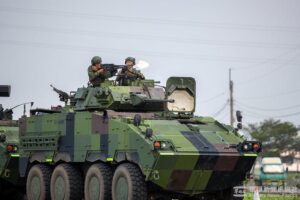
Taiwan is a flashpoint that could trigger a major conflict between the United States and China. Beijing has an immediate territorial interest in Taiwan, which belonged to China for centuries before passing into Japanese hands after the Sino-Japanese War of 1895. After Japan’s defeat in World War II, the island was abandoned by Japanese imperialism, and with the victory of the CCP in 1949, it became a refuge for the Kuomintang and the Japanese bourgeoisie. Since then, China has sought to reincorporate Taiwan as part of its unfinished national unification. There is, however, growing rejection of reunification among the Taiwanese people, who repudiate the CCP’s Bonapartism. This legitimate sentiment against Xi’s authoritarianism is exploited by pro-imperialist bourgeois parties in Taiwan, such as the ruling Democratic Progressive Party, which supports the island nation’s subordination to the United States. The Kuomintang, despite having adopted closer ties with Beijing, also seeks autonomy and has a long history of closeness to Washington. This dynamic complicates the situation. The U.S. is exerting increasingly interventionist pressure on Taiwan, arming and training the Taiwanese army with the aim of turning the island into a kind of U.S. military protectorate in Asia. The United States has increased funding for the Taiwanese army and has indirectly participated in its annual training sessions, called Han Kuang. It is also campaigning with the island’s capitalists for the modernization of its armed forces (Taiwan has been receiving critical systems produced in the United States, including the M1A2T Abrams main battle tank, the High Mobility Artillery Rocket System [HIMARS], the Patriot long-range air defense and missile system, etc.).
Meanwhile, the Chinese government considers the Democratic Progressive Party’s policy to be separatist and is responding with military exercises in the Taiwan Strait region. Xi has repeatedly called on the People’s Liberation Army to prepare for war, signaling that the central government seems to have become convinced of the possibility of armed unification. It is impossible to know precisely how long an operation of this magnitude would last, but international turmoil could lead to serious incidents, such as the launch of missiles on the island.
We defend Taiwan’s right to self-determination in all circumstances, despite Beijing’s diplomatic pressure and the One China policy. But this right to self-determination cannot be realized by subordinating the island to U.S. militarism. The specific form of defending self-determination in Taiwan is linked to a workers’ and popular program that is independent of both U.S. imperialism, which militarizes the island, and Chinese Bonapartism, which engages in military provocations. Any military aggression by Xi’s China aimed at forcing unification against the will of the Taiwanese population must be vigorously rejected, since it would not improve conditions for the most exploited and oppressed sectors of the island, who would fall under the control of a reactionary Bonapartist regime led by the CCP. Conversely, the growing militarization of Taiwan, encouraged by the U.S. imperialist two-party system and accompanied by a subtle shift in the U.S. stance on the possibility of military intervention, must be rejected by the international working class as part of an uncompromising anti-imperialist position. In light of these two perspectives, the actions of workers on both sides of the Strait are vital. This programmatic stance is the best way to combat the native bourgeoisie in its various factions, whether pro-Chinese or pro-American. A working-class and socialist Taiwan, independent of the contending powers, could serve as a lever for developing anti-capitalist and anti-imperialist mobilization throughout Asia, opposing U.S. imperialist policies while also challenging Beijing’s agenda.
6. A New Generation of Workers and the Class Struggle in China
The class struggle in China over recent decades has developed in the context of the country’s astonishing cycles of economic growth. In the first decade of the 2000s, rural struggles emerged prominently amid significant labor migration to export-oriented cities. Small farmers and rural workers clashed with local governments over the expropriation of their land, the advance of real estate development, and the rise of U.S.-style agribusiness.
In the cities, from 2004 to 2008, strike movements blended the distinct characteristics of the Rust Belt in the North (where the former large-scale danwei system saw workers fighting layoffs and the restructuring of state-owned enterprises) and the Solar Belt in the South (where migrant rural workers demanded an end to wage delays, the abolition of corporal punishment and military discipline in production, and improved working conditions in modern export-oriented industries). As Ching Kwan Lee explains, in these “rust and sun belts,” which encompass differentiated production systems, prolonged strikes, such as the two-month strike by 6,000 workers at the Tianwang textile factory in Xianyang, Shaanxi, were often accompanied by shorter strikes in the Pearl River Delta, the heart of China’s low-value-added industry, which were swiftly suppressed by the police.1Ching Kwan Lee, Against the Law: Labor Protests in China’s Rustbelt and Sunbelt (Berkeley: University of California Press, 2007).
This wave of strikes peaked in 2010 with the strike at Foshan Honda in Guangdong, where workers achieved wage increases and defeated the Japanese multinational. This victory influenced later strikes at other car manufacturers, such as Toyota and Mitsubishi, as well as at Foxconn, which garnered attention for the suicides of workers amid poor factory conditions. Since Xi’s inauguration in 2013, there has been a notable resurgence of state coercion and repression against strikes; as Manfred Elfstrom points out, the 2010 wave was followed by a gradual decline in labor unrest. The official discourse of “national unity for China’s rise as a power” took hold, coinciding with the end of the cycle of exponential growth in Chinese GDP amid the global economic crisis.
The Chinese economy entered a “new normal,” characterized by a slowdown in growth and declines in key segments of GDP, particularly the real estate sector, affected by a demographic crisis and stabilized urban migration flows. To mitigate unexpected economic shocks amid renewed competition with the United States, Xi adopted a stance of total repression against workers’ economic resistance, dismantling efforts to create independent unions, such as the 2018 Jasic Technologies strike, which had garnered student solidarity while increasing the national average wage from very low levels.
The coronavirus pandemic further intensified this trend of repression, containment, and the disciplining of workers’ struggles. Yet strikes did not cease entirely; Foxconn Zhengzhou, the world’s largest iPhone factory, with 200,000 workers, was paralyzed by a massive strike that sparked nationwide demonstrations that challenged Xi’s zero-COVID policy. Nevertheless, strikes became more fragmented, dispersed, and shorter in duration. Student solidarity was stifled, and labor research centers, such as the China Labor Bulletin, were shut down. State Bonapartism intensified alongside job and personal insecurity — even in state-owned enterprises, where subcontracted and rotating labor is common, reserving job security for a select few sectors — an issue not alleviated by the relative increase in average wages, which varied widely between provinces.
Against this backdrop, the objective circumstances of the economic slowdown are exacerbating social discontent, despite a relative decline in strikes over the past two decades. The forms of mobilization are diversifying, including movements against the 996 work schedule. For example, tang ping (lying down) is a social phenomenon among young Chinese that involves rejecting the intense pressure to work excessively and perform above average by consciously adopting a lifestyle of reduced effort and limited desires. Similarly, there is bai lan (let it rot), which means accepting a deteriorating situation rather than trying to reverse it. Some authors isolate these manifestations of discontent from more traditional forms of the labor movement. Yet they reflect the potential for hegemonic articulation of a new generation of young workers — women, men, sexual minorities, and ethnic minorities — many of whom are connected to the gig economy and the digital services industry. This generation tends to have a higher cultural level than their predecessors, a closer relationship with large urban centers, a more critical view of social inequality and job insecurity, and increased demands for rights. Many have abandoned hopes of social mobility after experiencing the negative impact of “Chinese power” based on overexploitation, economic slowdown, and a lack of quality jobs. The Economist estimates there are 200 million precarious and temporary workers in cities, constituting 40 percent of the urban workforce, with 84 million relying on digital platforms for their survival — many without access to urban public services thanks to the outdated hukou system. The Chinese government is concerned about preventing endemic issues such as unilateral wage cuts, layoffs without compensation, forced transfers to other provinces without remuneration, and company bankruptcies because of production relocations — events that could spark a new wave of social unrest in a context of protests across Asia, from Nepal to Indonesia and from Bangladesh to the Philippines.
As Andrea Ferrario notes, the Chinese working class is no longer willing to passively accept unilateral sacrifices. Striking is no longer viewed as an extreme and isolated gesture but rather as a legitimate means of resistance against attacks on workers’ rights. The return of class struggle in China is likely to take new, nontraditional forms that reflect the modern class structure resulting from technological industrialization and incorporate the current youth and women’s movements in China, where issues of oppression, precariousness, and inequality are central. While they must navigate the challenges posed by the absence of traditional institutions for independent organization, they benefit from new forms of connectivity and social regrouping. The very need for struggle might give rise to self-organizing institutions that operate outside the official trade union federation and resist the CCP’s control. Undoubtedly, any reflection on the contours of the social revolution of the 21st century must include China, which represents an organizational challenge for the FT-CI.
7. China and the FT-CI
As the FT-CI, we have extensively covered China in various publications (Estrategia Internacional, Ideas de Izquierda, and the La Izquierda Diario newspaper chain). We addressed this debate at the 2015 conference, where different positions were expressed. Since then, there have been important changes in China, in its global projection, and, most notably, in its relationship with the U.S. In articles by Esteban Mercatante and Juan Chingo in 2020, as well as those by André Barbieri in his book China: Donde los extremos se tocan (China: Where Extremes Meet), we find nuanced characterizations of China’s place in the world system and its prospects that share important similarities. Despite these analysts’ varying emphases, all agree that China is consolidating its imperialist characteristics and that its prominence as a world power is growing. Consequently, there is a common framework rejecting any position that supports China in its confrontation with imperialist powers.
To organize the discussion ahead of the conference, we briefly present the positions articulated in these articles.
1. Imperialism in the process of construction or constitution, not yet consummated. This formulation, adopted by Esteban based on Au Loong Yu’s elaborations, recognizes China’s advanced but still incomplete imperialist character. This perspective does not imply that the process will inevitably materialize; China faces multiple threats, including the existence of “too many Chinas” within its borders, owing to productive inequalities and the deep tensions stemming from its accelerated capitalist development, which generates discontent among those resisting this process and those who feel it is not advancing rapidly enough. Despite uncertainties about its future, “imperialism in the making” helps us understand China’s current position. According to various objective indicators, China is ahead of some of the major imperialist powers, although it remains far behind the United States. This situation is remarkable, though it also reveals vulnerabilities that render its position precarious.
2. A rapidly rising capitalist state with imperialist features. This formulation is used by André in his book, and he shares a similar view with Chingo. This descriptive approach aims to illustrate what China is today and the direction of its structural trends in global capitalist competition. Most importantly, it emphasizes that the future evolution of the Chinese phenomenon is not predestined. China’s transformation into an imperialist power would involve shocks and upheavals of global historical magnitude. The possibility of any kind of “succession” to U.S. hegemony will not be peaceful or evolutionary; it will occur amid wars and revolutions on a global scale.
These classifications were proposed by comrades discussing China in the FT-CI. We believe these characterizations reflect a common understanding of China’s growing imperialist features. China’s extensive influence in the exploitation of labor and natural resources from weaker countries, the Bonapartist contours of the political regime led by the CCP, and the reactionary nature of the Chinese state’s international policy aim to enhance its position within the imperialist system. This shared perspective on the nature of the Chinese state and the trajectory of its growth will enable us to adopt a correct common policy in the event of military conflict between the United States and China. As we stated in the virtual session of the 12th FT Conference, this would be a “reactionary war in which the defeatism of both sides would be the basic definition.”
This position gives rise to significant political and strategic struggles against state-centric currents of thought that advocate for “capitalist multilateralism.” Despite the broad heterogeneity of this political landscape, there is a consensus that China’s emergence as a “new pole of power” is a positive development and that the Chinese government is an ally in the anti-imperialist struggle of oppressed peoples, particularly against U.S. aggression. In Latin America, this view is widespread, influenced by progressive populism. This position is supported by notable figures such as Elias Jabbour and illustrious figures of Stalinism, as well as more critical intellectuals who do not regard China as “socialist” but see in it the potential for a more harmonious world (including Claudio Katz, Atilio Borón, Rafael Poch-de-Feliu, and Gabriel Merino). The debates we have had with these authors provide a Marxist counterpoint to their views, engaging in critical dialogue with key representatives of this branch of “geopolitical campism” within progressivism and with classical authors who have analyzed the rise of the Asian giant, such as Giovanni Arrighi, Perry Anderson, Alain Badiou, and Slavoj Žižek.
In these critical discussions, we argue that the only form of multilateralism possible within the capitalist system is one characterized by military competition between powers or the intensification of rivalries among the United States, China, Russia, France, and Germany, among others. This dynamic also exacerbates the nationalist sentiments propagated by states. Proponents of multilateralism claim that their position aims to mitigate militaristic tensions and “avoid new wars” (some argue that China’s global economic hegemony does not rely on equivalent military dominance today). In reality, they are fostering nationalist and social-patriotic positions, aligning one power bloc against another in the event of new wars. The struggle against national oppression and imperialism does not find an ally in China; it necessitates the revolutionary initiative of the working class to unite all the oppressed people of the world, beginning with cooperation and solidarity among Asian workers, ultimately leading to the unification of the struggle against national oppression with the struggle for social emancipation.
Similarly, the FT-CI’s independent class stance facilitates discussions with right-wing centrist positions that, while criticizing China and rejecting it as a “new socialist model,” argue that Chinese capitalism has not yet been fully restored. In this context, they advocate for a policy of “conditional defense of China.” This perspective is exemplified by Valério Arcary, associated with PSOL and Jacobin magazine, whose political logic leads to the defense of the Chinese capitalist state in its confrontation with Western imperialist powers, aiming to “prevent the completion of the restoration.”
In the case of LIT/PSTU, there is an apparent majority position that regards China as already a consolidated imperialism “like the United States,” although there are intermediate positions and factions of militants who do not share this view. The faction expelled from the LIT (FDR), according to the majority’s public statement, asserts that, along with Russia, China represents a “semi-colonial capitalism” (or even “dependent capitalism,” a distinction that remains unclear, as there is currently no written material). Our writings (books, articles, etc.) enable us to engage in a more nuanced dialogue, distinguishing between China’s current status and the already-consolidated imperialist status of the United States, particularly in the context of its rapid evolution in the competition for niches of global capitalist accumulation.
The struggle for a Marxist position on the Chinese question is a significant contribution of the FT, one that we must deepen and pursue on an international scale.
This article was originally published in Spanish on November 16, 2025 in Ideas de Izquierda.
Notes
| ↑1 | Ching Kwan Lee, Against the Law: Labor Protests in China’s Rustbelt and Sunbelt (Berkeley: University of California Press, 2007). |
|---|