The history of the Chinese labor movement intertwines with the history of the country’s industrial development, stemming from clashes against foreign oppression in China and military conflagration among imperialist powers. Already in the early stages of its confrontation with the ruling class, we observe two essential traits: first, Chinese workers can hardly be classified, at any point in their history, as mere objects of exploitation; second, their class struggle became accustomed to unfolding simultaneously against the native ruling class and foreign oppression. Below, we outline in brief strokes some decisive moments of proletarian struggle in China over the last century and a half.
The properly national formation of China, with the very long process of territorial unification still underway during the Qing dynasty, and later its fall until the founding of the People’s Republic of China in 1949, was intertwined with increasingly significant cycles of workers’ struggles. According to historian Elizabeth Perry, in Shanghai on Strike: The Politics of Chinese Labor:
“Workers’ protests played a central role in the political transformations that traversed China in the twentieth century. The 1911 Revolution that overthrew the imperial system, the May Fourth Movement that inaugurated a new political culture, the rise and fall of the nationalist regime, the victory of the communists, and even the post-1949 political design—all these events were profoundly affected by the Chinese labor movement” (Perry, 1993, p. 2).
In the nineteenth century, only the outline of the Chinese proletariat was present, emerging from the powerful combination of migrant rural workers heading to port cities and dispersed urban artisans. In the twentieth century, with the proletariat fully forming in the “forge of Hephaestus” of the nascent industry, the history of the Chinese labor movement had multiple explosive points. Most notable was the “cataclysmic eruption,” in the words of Mark Selden in Labor Unrest in China (1995), in the mid-1920s, as a consequence of World War I and the Russian Revolution of 1917. This period, considered by many analysts (Chan 1995; Perry 1993; Selden 1995) as the most convulsive in the history of the Chinese labor movement, is located between 1922 and 1927, encompassing the founding of the Chinese Communist Party and the great workers’ uprising of the Chinese Revolution of 1925–27.
A second explosion of vitality in the Chinese labor movement, though of lesser intensity than the first, occurred during the Civil War (1946–49), which culminated in the Revolution that brought Mao Zedong to power, giving rise to the People’s Republic of China in 1949. Three other relevant moments in which the labor movement played a major role occurred within the PRC itself: in 1967, at the height of the Cultural Revolution; in 1979, during the turbulent transition from the Mao era to the Deng era; and in 1989, with the events related to the Tiananmen Square Massacre. All these periods of workers’ struggle reveal the intimate relationship of the Chinese proletariat with global events, in sharp contrast to the imperial Chinese tradition of isolationism and hostility toward foreigners (a characteristic later adopted by the CCP bureaucracy as part of its strategy to block the expansion of international revolution).
Anti-Colonial Struggles in Nineteenth-Century China
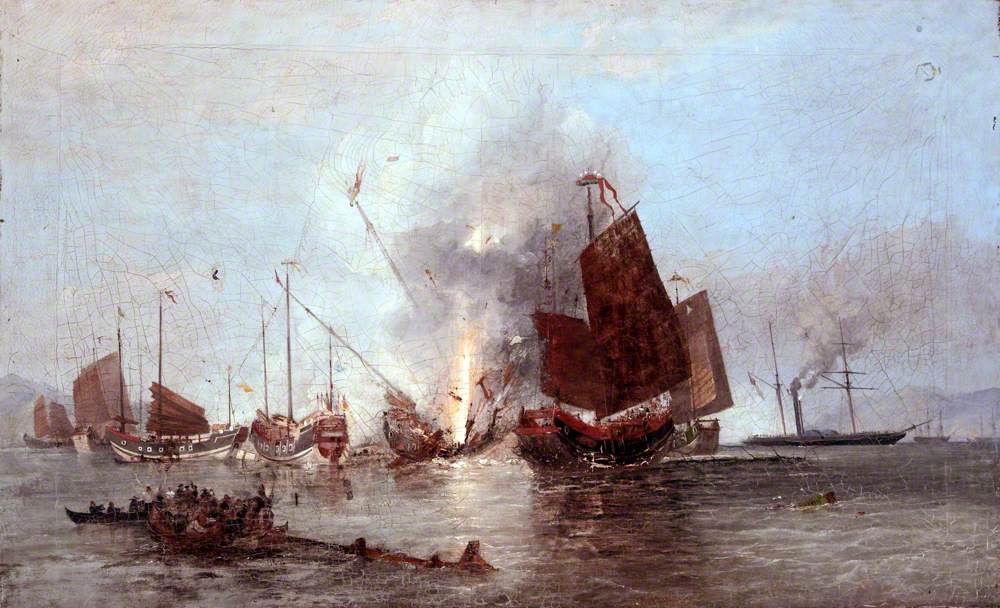
In the early stages of workers’ activity in China, still in the first half of the nineteenth century, disturbances aimed to oppose national oppression by European powers, particularly England. Sparse and immersed in a sea of peasants, the working class had little numerical weight at the time of the First Opium War (1839–1842), concentrated in guilds that animated artisanal production in coastal cities such as Shanghai and Canton. Even under these conditions, port workers played an important role as vanguard fighters against foreign military intervention.
Before the Sino-British conflict, there are records of disturbances by textile workers in Nanhai and Panyu, near Canton, against the entry of British yarn into Chinese ports, as a way to defend native spinning manufacture. During the Opium War, textile workers also acted in militias that attacked British invaders in the Sanyuanli Incident of 1841 (Selden, 1995, p. 71). After Emperor Daoguang announced the suspension of British trade rights and the forced seizure of Crown merchants’ opium, dockworkers played a prominent role in military resistance—though with little chance of success—against the British fleet commanded by plenipotentiary Henry Pottinger (later the first governor of Hong Kong).
Before the Treaty of Nanking sealed Britain’s victory, Chinese workers had already taken advantage of contact with enemy military technology to absorb it into their own arms industry. This curious aptitude for appropriating foreign technology, which would later mark China’s industrial life in the transition from the twentieth to the twenty-first century, was already visible in embryo by the mid-nineteenth century. British China specialist Jonathan Spence recounts:
“In Xiamen, for example, they found an almost completed replica of a double-deck English warship with thirty cannons; it was nearly ready to be launched, and work on several similar ships was well advanced. In Wusong, they found five paddle-wheel boats ready, armed with newly cast bronze cannons. In Shanghai, they captured eighteen eighteen-pounder naval cannons, new and well executed, perfect in every detail, such as the sights cast into the body and the flintlock ears. All were mounted on sturdy wooden carriages with iron axles” (Spence, 1996, p. 169).
Similarly, dockworkers in the Sino-French War of 1885 resisted colonialism by refusing to unload enemy warships—despite the clear military disadvantage given France’s naval superiority. In 1894, during the conflict against Japan that also ended in foreign victory, native workers labored under the command of the Zongli Yamen (a kind of Qing “Foreign Ministry”) to build a military apparatus minimally compatible with the challenges posed by Japan. Numerous examples exist of these small skirmishes by Chinese militias against European and Asian colonialism, in which the labor force of major port cities, crushed under Qing rule, served as material strength against invaders.
Composition of the Chinese Working Class
It is crucial to note the degree of confrontation against foreign oppression as a defining mark of the nascent Chinese proletariat. The incidents that triggered the great waves of insurrectionary strikes in the early twentieth century began with abuses by the British and Japanese, who between 1860 and 1895 imposed harsh survival conditions on the Chinese empire after military victories over the Qing.
With the Treaty of Tianjin (1858), Britain opened Chinese territory to the opium trade. With the Treaty of Shimonoseki (1895), Japan secured the right to build factories in all of China’s open ports, especially in the cotton industry—a bastion of major workers’ revolts prior to the 1925 Revolution and a stronghold of Communist Party influence.
Another notable point was the composition of the Chinese working class: differences in worker qualifications were often decisive in industrial cities for the level and type of organization achieved. Elizabeth Perry notes that in Shanghai, while specialized artisans from southern China held better jobs and enjoyed guild protection (regulating wages and working hours), northern peasants usually could not attain these positions and had to settle for more precarious work. These rural workers, lacking specialization, could not join guilds and were forced to organize into different gangs (such as the “Green Gang” after the 1911 Revolution), whose hierarchical control over precarious workers placed them in supervisory roles.
This division into “two souls” of the Chinese working class would later reappear in renewed form in the split between the old state-sector working class and the new rural proletariat that filled export factories during Deng Xiaoping’s pro-capitalist reforms.
Divisions and Workers’ Solidarity
These divisions were encouraged by manufacturing managers and foreign administrators operating in China (the gangs had material ties of interest with the bosses). Foremen, who held influence over workers through the hierarchy of gangs or guilds, used this power to extract monetary benefits from owners, under threat of facilitating controlled strikes. However, these divisions did not necessarily predispose workers against common action. On the contrary, Emily Honig (1986; 1989), Gail Hershatter (1986), and Elizabeth Perry (1993) describe processes of workers’ solidarity that integrated—into the incipient traits of class consciousness emerging at the end of the nineteenth and beginning of the twentieth century—lines of gender and place of origin as factors of collective organization and action, for example, in the segment of women workers in the cotton industry, long dominated by the Japanese.
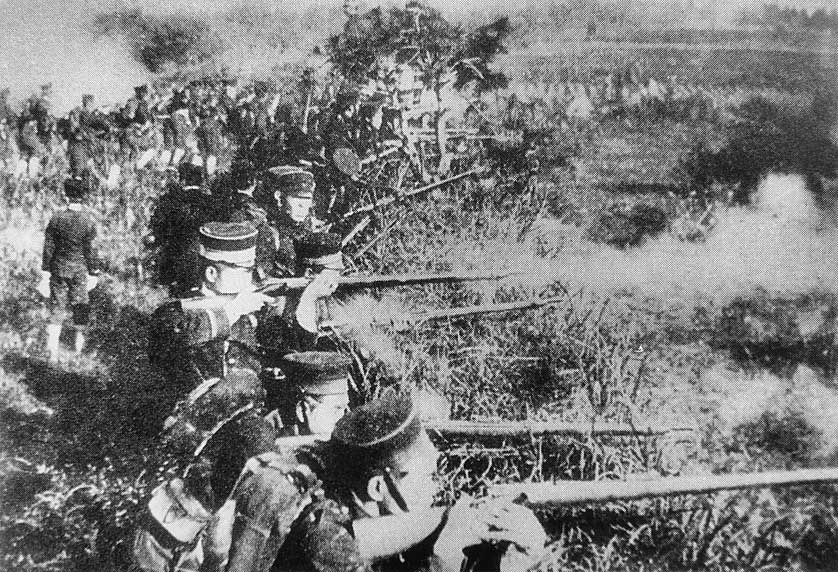
Image of the Sino-Japanese War of 1895
Except for certain excesses in characterizing the identity motives of protests, which permeated Chinese workers’ consciousness, these were not obstacles but rather factors that encouraged a new kind of collective consciousness, often class consciousness, among urban workers. These reasons help illuminate the creative combination of epochal transformations in imperialist capitalism, especially at the turn of the twentieth century, and the influence of revolutionary ideas after the Russian Revolution of 1905, which began to take root in small circles of Chinese industrial cities. Thus, propelled by the defense of class conditions at work, strikes or disturbances against employer arbitrariness were not scarce:
“In 1868, workers at the Shanghai Dock and Engineering Company went on strike to prevent a wage cut. In 1879, blacksmiths at Pudong Engineering Works stopped work to protest physical abuse from a foreign supervisor. In 1883, workers at the Jiangnan Arsenal mutinied when a factory foreman tried to extend the workday. Two years later, they staged a walkout demanding higher wages. In 1890, a new administrator provoked a strike by announcing an increase in the workday from 8 to 9 hours. These early protests were largely defensive in nature. Wage cuts, physical abuse, and longer workdays precipitated conflicts. With industrial expansion after the Sino-Japanese War of 1894–95, however, the pattern of artisan strikes changed notably. The greater demand for skilled workers encouraged more aggressive forms of protest by this more favored sector of the workforce” (Perry, 1993, p. 38).
The workers’ strikes that emerged, especially among skilled artisans (carpentry, masonry, printing, painting), acquired a character not only defensive but also offensive, demanding new concessions during the period leading to the 1911 Revolution, directed by bourgeois nationalist Sun Yat-sen. With the overthrow of the Qing dynasty and the last emperor, Xuantong, the freedom of action of the Chinese labor movement, already in full course of industrial concentration, increased, since the penal code that stipulated severe punishments for strikers lost effect. The general politicization of urban discourse at the beginning of the republic encouraged workers, especially skilled artisans, to formulate more ambitious demands in their labor conflicts.
Industrialization and the Formation of the Chinese Proletariat
But nineteenth-century China saw only the outlines of a still fragmented, sparse, and small proletariat, rooted in urban crafts and small-scale textile manufacture. Submerged in the vast peasantry, the Chinese working class began to concentrate in urban centers connected to the slow and gradual expansion of foreign maritime trade. The period from 1895 to 1918—spanning from the beginning of reform movements against Qing political oppression to the end of World War I—represents the transitional and maturing phase of the incipient urban working class, which would undergo an intense period of industrialization beginning in 1914, spurred by the war.
The center of the nascent labor movement in China was Shanghai, the country’s largest city and beneficiary of maritime trade development in the second half of the nineteenth century. Other coastal cities, such as Canton and Tianjin, also saw their industries flourish through foreign trade and developed proletariats tied to these activities.
“Examining the early decades of the Chinese labor movement, Jean Chesneaux identified four strike peaks: 1898–99 (10 strikes), 1904–06 (15 strikes), 1909–13 (38 strikes), 1917–19 (46 strikes). Each peak was longer than the previous one. The first coincided with the Reform Movement of 1898, the second with the anti-U.S. boycott of 1905, the third with the 1911 Revolution, and the fourth drew energy from nationalist stimulus during World War I and the Russian Revolution of 1917, culminating in the May Fourth Movement of 1919. While Chesneaux’s reconstruction of national dates is useful, Elizabeth Perry’s detailed study of Shanghai suggests an important modification. Contrary to Chesneaux, Perry found a sharp increase in strikes in Shanghai: from 30 strikes between 1909 and 1913 to 86 strikes between 1914 and 1918. World War I was the “golden age” of Chinese industry, a moment when China benefited both from high demand for manufactured goods and from the weakening of foreign capital’s control, occupied with the war—a favorable situation for the flourishing of labor militancy” (Selden, 1995, p. 72).
The major events that strengthened Chinese industry and, consequently, increased the weight of the working class were World War I and the Russian Revolution, which enabled the connection of the labor vanguard with the best of Marxist strategic experience developed by Lenin and Trotsky in the Third International (despite the many difficulties arising from linguistic differences and China’s particular political traditions). The stimulus of these international events, along with relentless Japanese aggression in Chinese territory and the growth of the urban proletariat in central economic regions, paved the way for the most intense cycle of labor activism in Chinese history, between 1919 and 1927.
Shanghai was the center of this dynamic emerging proletariat. In 1933, nearly half of the Chinese working class was located there; between 1918 and 1940, 2,291 strikes were staged in the city, with 65% achieving partial or total success.
Proportionally, the number of urban workers paled in comparison to the numerical strength of the peasantry. In 1919, China had 2 million urban industrial workers, compared to hundreds of millions of peasants and tens of millions of rural laborers, in a predominantly agrarian society (as was also the case in neighboring Russia). However, as in Russia, the issue was not merely about absolute numbers of these relative populations, but rather their role in production and their concentration in the nerve centers that defined the course of the national economy. In Shanghai, Canton, Tianjin, and Beijing, the importance of the Chinese proletariat was magnified by its concentration in the most strategic positions of the economy and in urban zones most sensitive from the standpoint of national politics.
A process similar to what Trotsky described in Russia was occurring in China, under the law of combined development: a few million workers, concentrated in the strategic centers of the economy, led a hundred million peasants:
“The law of combined development manifests itself at every step, in the economic domain, both in simple and complex phenomena. Almost without national routes, Russia was obliged to build railways. Without having passed through European handicrafts and manufacture, Russia leapt directly into mechanized production. While peasant economy often remained at the level of the seventeenth century, Russian industry was at the same level as advanced countries and sometimes surpassed them in many respects […] A numerically weak Russian bourgeoisie, which had no national roots, thus confronted a relatively strong proletariat with deep and solid roots in the people.”
Nationalism and Communism
In this social formation of the Chinese working class, as noted earlier, the tradition of resistance against foreign aggression marked the consciousness of its political activity. The May Fourth Movement of 1919 and the May 30th Movement of 1925 (not to mention the clashes from 1840 to 1895 against Euro-Asian colonialism) were carried out in the name of resistance to English and Japanese imperialism. National liberation struggles influenced the development of the subjectivity of the Chinese labor movement, and it is no surprise that, politically, this subjectivity expressed itself in heterogeneous ways. Bourgeois nationalism, embodied in Sun Yat-sen’s and Chiang Kai-shek’s Kuomintang, had as much interest as the communists in winning the working-class base to their ranks in the 1920s. This was one of the reasons that led Chen Duxiu, future founder of the Chinese Communist Party, to seek to create Marxist workers’ associations in Shanghai.
Whether demonstrating loyalty to Sun Yat-sen’s Three Principles of the People or to Marxism, leaders of both the CCP and the Kuomintang felt compelled to assign high priority to the working class:
“Believing that industrialization was the hope of the future, both nationalists and communists made great efforts to enlist the labor movement under their political banners […] Deep divisions persisted within the working class, opening the way to a fragmented base for both parties” (Perry, 1993, p. 68).
This political dispute between nationalism and communism would become central throughout the cycle of revolutions and wars spanning 1922 to 1949. It is therefore important not to examine the results of cycles of strikes and workers’ disturbances as leading to a homogeneous ideological affiliation. As history has often shown, and China was no exception, class struggle shapes political loyalties in contradictory ways, depending heavily on the balance of forces at the national and international level.
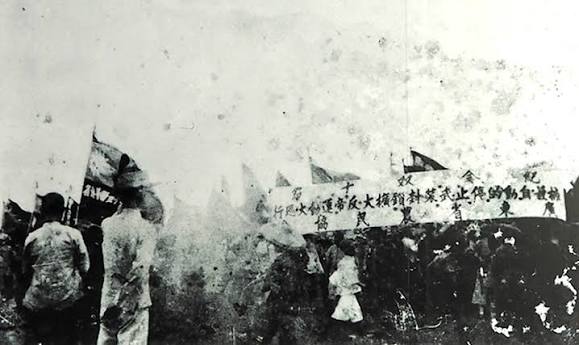
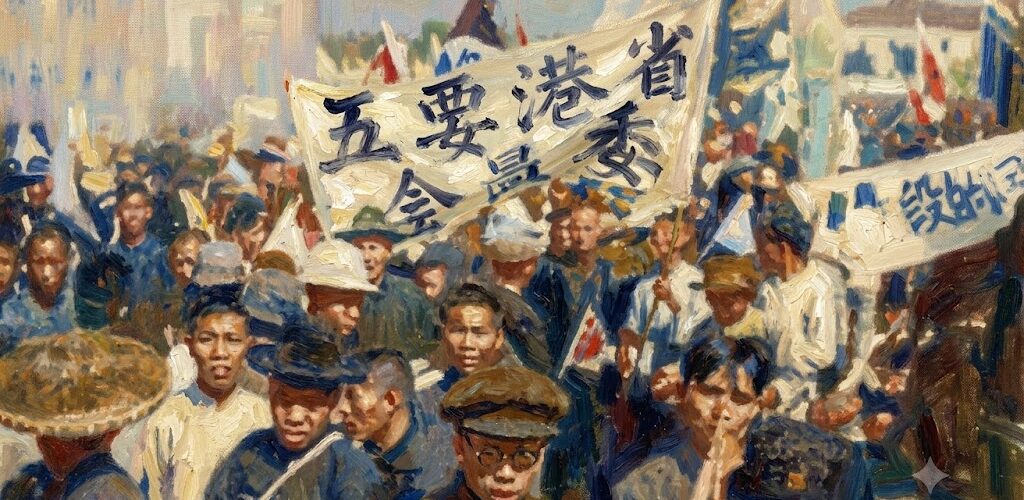
Hong Kong Seamen’s Strike and the Canton-Hong Kong Strike, May-June 1926
In Shanghai itself, which saw the birth of the CCP in June 1921, communists and nationalists competed to organize the working class through rival unions. Kuomintang politicians, aided by factory foremen and the same gangsters who controlled precarious labor, sought to channel workers’ activism toward their own ends. The Shanghai Federation of Trade Unions, controlled by the Kuomintang’s conservative nationalist ideology, persecuted and attacked members of the Shanghai General Federation of Trade Unions, created after the May 30th Movement in 1925 and influenced by the CCP. This communist federation gained considerable prestige between 1923–1926, bringing together 117 unions, including the Shanghai Graphic Workers’ Union and unions representing workers in Japanese-owned cotton factories. This strength, however, rested on fragile foundations, as the CCP abandoned political independence in favor of integration into the Kuomintang, following the orientation of the majority faction of the Communist International at the time, led by Stalin and Bukharin.
We will see later that the leadership of the Chinese Communist Party itself, under the auspices of the Communist International, decided to dissolve itself within the Kuomintang and hand over to Chiang Kai-shek the power of life and death over thousands of workers. Few intellectuals manage to untangle this knot, which belongs to the field of strategy. To understand the political disputes between these two currents, the history of internal factional struggles within the parties is conditio sine qua non, so as not to fall into superficial examinations.
From the participation of Shanghai workers in the May Fourth Movement of 1919, with 60,000 strikers protesting against the Chinese government’s passivity in the face of Japan’s imperialist intentions under the Treaty of Versailles; through the strike of Hong Kong and Canton sailors in 1922, which virtually paralyzed regional trade for months; to the May 30th Movement in 1925, which began in Shanghai factories and spread throughout the country to give rise to the Chinese Revolution—the labor movement was at the center of national political life as never before. Once again, the Chinese working class, now far stronger than during the British Crown’s incursions in the Opium War, positioned itself as a vanguard against imperialist aggression, especially from Japan and England. To do so, it had to confront obstacles imposed by the Chinese national bourgeoisie (organized in the Kuomintang), which, although not accepting all foreign impositions, harbored a much deeper hatred of the dangers posed by the Chinese working class than of Euro-Asian capital.
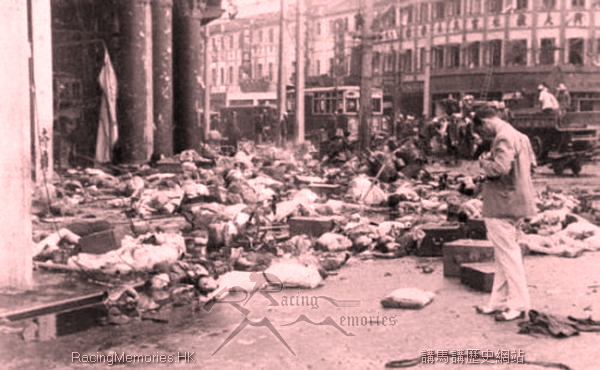
Shootout during the May 30th Movement, 1925
The May 30th Movement of 1925 was sparked by one of the brutal arbitrariness committed by Japanese imperialism and its capital in China. The high point of a great wave of strikes, it began with the murder in Shanghai of a Chinese worker, Gu Zhenghong, a member of the cotton workers’ union, during a three-month strike in a Japanese-owned cotton factory. His funeral, attended by more than 10,000 workers, awakened the sympathy of the city’s proletariat and became a major event. When ten other Chinese workers were shot dead by the British police operating in Shanghai, 160,000 workers went on strike (50,000 students boycotted classes in support). When dockworkers blocked Shanghai’s port, Japanese ships entered the Whangpoo River to reopen it, killing another 60 workers. The continuation of the massacre increased workers’ anger, igniting the Chinese Revolution. Strikes and mass assemblies spread across coastal industrial cities. In 1925, the consequences of the May 30th Movement led to 130 strikes involving 400,000 workers. That year, another foreign power followed closely behind Japan’s crimes: England, which had actively participated in exploiting and militarily devastating Chinese ports in the nineteenth century, also demanded rights over native labor. When British troops killed 52 demonstrators on June 23, 1925, 300,000 Chinese workers took to the streets, once again fueling one of the most significant strike cycles in national history.
The Revolutionary Peak of 1925–27
This was the most concentrated period of strike activity in the history of the Chinese working class. To defeat Anglo-Japanese oppression and carry out an agrarian revolution, workers—hundreds of thousands organized in the Communist Party—had the strength to overcome the national bourgeoisie itself, a condition for eliminating the remnants of China’s social backwardness inherited from feudal “warlords.” But there was something rotten in the kingdom of Denmark (in this case, in the “Middle Kingdom”).
Since 1923, the CCP leadership had been acting in close alignment with the nationalist bourgeoisie, reducing the battle for proletarian hegemony in favor of collaboration in an “anti-imperialist united front,” whose essence was the abandonment of class independence—to the point that this “front” included the triumvirate Huang Jinrong, Du Yuesheng, and Zhang Xiaolin, the leading opium traffickers in Shanghai, who later became Chiang Kai-shek’s intimate allies in the anti-communist offensive of 1927.
In 1925, a series of strikes began following Gu Zhenghong’s assassination. Chiang Kai-shek’s troops were advancing in their “Northern Expedition” in 1926 against the warlords, aiming at national unification. The peasant revolt, which followed the expeditionary forces by occupying estates and killing landlords, and the agitation in the cities, deeply disturbed the Kuomintang, which awaited the moment to violently end the disturbances—and the Communist Party. Despite this, all strike activity, which unfolded into a series of insurrectionary calls, was conducted by the CCP with the tactical objective of collaborating in the rear with Chiang’s troops.
This was because, following the line of the Fifth Congress of 1924—in which Stalin, Zinoviev, and Kamenev began organizing the campaign against Trotsky and Lenin’s legacy—the Communist International defined that the CCP should incorporate itself into the Kuomintang (something Trotsky had opposed since 1923). This definition was based on a selective reading of the “General Theses on the Eastern Question,” one of the results of the Fourth Congress of the Comintern in 1922. The “Theses” clearly stated that the national bourgeoisies of colonies and semi-colonies were incapable of achieving national independence and resolving the agrarian question; however, they did not generalize the Russian experience of 1917, failing to assert that the working class must lead the revolution to achieve these goals.
Despite the semi-staged character of the “Theses”—which would be fully surpassed by Trotsky’s global conception of the theory of permanent revolution in 1930—their strategic aim was the development of communist parties in the East, with class independence as a fundamental principle. Ignoring this principle, Stalin elaborated a rigid “theoretical” division between “mature and immature” countries for revolution—China fell fatally into the latter category—restoring the old formula of the “democratic dictatorship of workers and peasants” for backward capitalist countries, a conception already marked as outdated by Lenin himself, to cover his open policy of class collaboration with the bourgeoisie. Furthermore, he revived the idea of “workers’ and peasants’ parties” for these countries, a way of renouncing the construction of independent revolutionary parties, which objectively led to the subordination of the CCP to the Kuomintang and its gangsters. Nothing could be further removed from the theoretical foundations that had originally given rise to the “Eastern Theses.”
In 1926, already under Stalin’s direct orders, this orientation deepened, and the CCP was commanded to dissolve organizationally and submit to Chiang’s orders, who was elevated by Stalin to “honorary member of the Comintern.” Against the formation of soviet-type organs of Chinese workers and peasants, and even demanding that the CCP hand over its weapons to nationalist troops, Stalin prepared the catastrophe of the Chinese Revolution. With such a strategy, the enemy needed no great strategic thought to defeat the workers. The issue becomes even more astonishing in light of the successes the Chinese proletariat had achieved in Shanghai in March and April 1927—successes handed over, under Stalin’s orders, to the executioners.
The real test of class struggle did not take long. On March 21, 1927, a general strike was launched in Shanghai, with undeniable success, founded on the railway strike that paralyzed government functions. The CCP unleashed the insurrectional plan, disarming the police and multiplying workers’ armament. From the standpoint of military preparation and tactical development, the Shanghai insurrection appeared triumphant. But strategically, this partial success was not used to defeat the enemy. Instead of promoting soviets—or self-organization bodies adapted to Chinese tradition—on the night of March 22 the CCP opened Shanghai’s gates to Bai Chongxi’s Kuomintang expeditionary troops. The awaited moment for Chiang Kai-shek had arrived, and in alliance with opium magnates and the British embassy (eager to eliminate communists from factories), repression was unleashed under General Bai’s command against Shanghai’s workers. On April 12, thousands of workers were executed, having previously surrendered their weapons to the Kuomintang under Comintern orders. Strikes and union organization were banned—the gangsters Du Yuesheng and Zhang Xiaolin raised the “Society of Mutual Advancement,” a shock troop for exterminating communists—while Chiang negotiated with warlords for a pact-based national unification, without land for peasants. Not satisfied with this defeat, the Comintern leadership instructed the CCP to subordinate itself to a supposed “left wing” of the Kuomintang, personified in Wang Jingwei (an occasional adversary of Chiang on the issue of “alliances”), who led the nationalists in Wuhan. The experience led to another massacre of workers, with Wang and Chiang’s rapprochement in 1927.
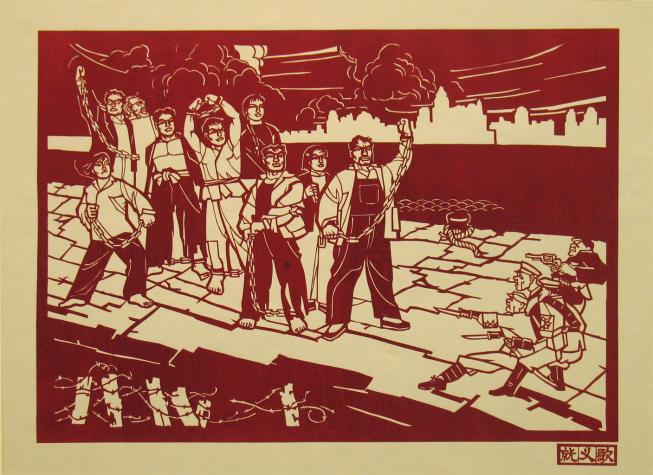
Chinese poster on the Shanghai Massacre of April 1927
Alarmed by the results of its policy, the Stalinist Kremlin suggested a 180º turn and launched an insurrectional offensive in Canton. Isolated and weakened by the Shanghai Massacre, Canton’s communists took up arms and seized political and economic control of the city. Under Li Lisan’s leadership, the CCP launched the insurrection on December 11, 1927; within hours, government services and the arsenal were in insurgents’ hands. Unlike in Shanghai, soviets were immediately erected in Canton to organize the economy: a series of decrees instituted land nationalization, confiscation of the city’s great fortunes, nationalization of major industry, banks, and railways.
Canton proved that it was possible for the Chinese working class to take power in Shanghai independently of the bourgeoisie and to lead the democratic-structural tasks of the oppressed nation, combined with socialist tasks of expropriating capitalists. The workers’ vanguard, supported by millions, was willing to resolve national emancipation and land distribution to peasants with its own independent program, against the bourgeoisie and warlords. However, the situation had changed after April’s events in Shanghai: Kuomintang troops entered Canton and militarily defeated the insurrection. The defeat was “splendidly” organized by Stalin and the new Comintern leadership.
From 1927 to 1949: Brief Lines
After the defeat of the 1925–27 Chinese Revolution, the labor movement fell into a state of catatonia. Under the dictatorial domination of the Kuomintang and warlords in the countryside, as well as Japanese repression, the Chinese working class endured years of setback and did not lead major conflicts until the end of World War II in 1945. Betrayed by the CCP and the Comintern under Stalin and Bukharin’s leadership, Chinese workers were atomized in the cities, disorganized and terrorized by Chiang Kai-shek’s repression and constant surveillance. The economic depression experienced in the country also discouraged any revival, even of defensive resistance.
In this nearly 20-year interim of workers’ quietism, some exceptions showed the vigor of anti-imperialist combat that had been part of the Chinese working class’s formation, especially in the late 1930s, when Japan prepared a new war against China. Centered in Shanghai, workers, in reduced expression, left their mark in resisting Japanese oppression between 1935–36—years of national protests against the Mikado’s interference—as well as between 1939–40, when Shanghai had already recovered from Japan’s military attacks of 1937.
The second major cycle of workers’ activism in China came with the end of World War II and the beginning of the civil war (1946–49) between the Kuomintang and the Communist Party, after Japan’s defeat. Just as the first cycle emerged from revolutionary processes after World War I, this new workers’ uprising arose in tune with revolutionary processes spreading worldwide after World War II (decolonization in Africa and Asia, revolutionary waves in Greece, Italy, and France, anti-bureaucratic processes in countries under Soviet control). However, unlike the impulse given by the Russian Revolution of 1917, which under Lenin and Trotsky sought to expand revolution internationally and strategically aid the construction of new communist leaderships globally, in the post–World War II period Stalin’s bureaucratic leadership—responsible for the defeat of the Chinese Revolution—emerged with greater prestige. The Red Army, with tens of millions dead and the old revolutionary guard murdered in Stalin’s Moscow Trials, was the only force capable of defeating the Nazi German army, which gave the Soviet Union international respect within the workers’ movement.
For the Soviet Union, this scenario meant strengthening bureaucratic control over Russian workers and over one-third of the globe, where capitalists were expropriated by the Red Army (without workers’ protagonism), through the Yalta and Potsdam Agreements between Stalin, Roosevelt, and Churchill. For China, it meant strengthening the Stalinist bureaucracy of the CCP, headed by Mao Zedong.
Mao, who argued that the revolution in China was directed “against imperialism and feudalism, not against capitalism” [4], defended that its driving forces included not only workers and peasants but also national bourgeois sectors and even landlords who “sensibly” opposed the Japanese. With Mao, we see Stalin’s earlier strategy of class collaboration with the national bourgeoisie under the idea that it would play a revolutionary role. This meant that, for Mao, the political front with Chiang Kai-shek’s Kuomintang was the central political-strategic piece, subordinating to it his conception of protracted people’s war for victory against the Japanese. Thus, Mao largely defended the policy that had led to the failure of the 1925–27 revolution, though unlike Stalin, he did not accept dissolving the CCP—an organizational detail compared to the open renunciation of workers’ political independence. For Mao, the CCP’s role was to guarantee unity with the national bourgeoisie at all costs and therefore protect it from the masses, strictly limiting workers’ and bourgeois struggles as a strategic condition for maintaining the protracted fight against Japanese imperialism. National liberation war was to impose limits on revolution.
Thus, based on a peasant party-army, Mao’s strategy of “protracted people’s war” did not aim to revive mass self-organization bodies of workers and peasants, but rather to suppress any soviet-type tendencies, like those in Russia in 1917 (which Stalinist bureaucracy had also suppressed). The CCP’s break with the Kuomintang only occurred by Chiang Kai-shek’s imposition, who, after Japan’s defeat and with U.S. support, rejected Mao’s policy of cooperation with the bourgeoisie and sought to eliminate the CCP. With no choice of alliance with bourgeois nationalism and rejecting the revival of democratic-soviet bases for the still atomized urban proletariat, Mao seized power after militarily defeating the Kuomintang. At the end of the civil war, the People’s Republic of China was born already bureaucratized, without Chinese workers having any freedom to decide the country’s political course, much less rational economic planning based on social ownership of the means of production.
Even with the obstacles imposed by Maoist bureaucracy, the second cycle of workers’ activism in China in the late 1940s was stronger than the passivity and resignation of the previous 20 years after 1927. However, the bureaucratic obstacle was strong enough that workers’ activity leading to the PRC’s constitution was substantially weaker than during the 1922–27 cycle.
The results of World War II were decisive for shaping the new cycle of workers’ activism, located on social terrain where Japanese imperialist aggression had practically receded after its defeat. After Japan’s surrender, the Kuomintang returned to China’s coastal regions. Japanese capital was expropriated, and its former Chinese workers placed under state administration. From 1946 onward, workers’ disturbances in China no longer occurred in the terrain of private capital but in the state arena. The combination of civil war, high unemployment, and rampant inflation after the war spurred major workers’ protests in Kuomintang-controlled cities (the CCP remained in rural areas surrounding major urban regions). In 1946, one in five people in Canton (228,000) were unemployed, and 30% (200,000 people) of Nanjing’s population were jobless. This panorama of poverty imposed by war’s consequences led to 1,716 strikes recorded in Shanghai in 1946, rising to 2,538 strikes in 1947. Behind workers’ revolt, the CCP fanned the flames in Kuomintang-controlled cities, without encouraging any soviet-type self-organization in the cities, over which it sought to exert control. After victory in 1949, the CCP dismantled, by coercion or repression, the labor unrest that had allowed it to defeat Chiang Kai-shek’s followers.
From the People’s Republic to the Tiananmen Square Massacre
This was a moment of growth in the material forces of the Chinese working class concentrated in urban regions. Between 1949 and 1956, the Chinese proletariat completed its transition from private property bases to state property. The industrial working class reached 25 million in 1952, increased to 54 million in 1966, and reached 148 million in 1988; of this total by the late 1980s, 100 million workers were employed in state-owned enterprises, while only 8 million were in private industry (Fairbank, 1986).
The situation of the working class in China, with the expropriation of Japanese imperialism and the socialization of strategic sectors of the economy, improved substantially. In fact, conditions improved for part of the working class—excluding rural workers and peasants. Workers in large state-owned enterprises, such as heavy industry (metallurgy and steel), gained multiple social rights: social security, lifetime employment, retirement, free healthcare, and wage increases. In exchange, the country’s military apparatus blocked all pores of political expression for the masses. The right to strike was virtually abolished, and People’s Liberation Army committees suffocated intellectual life in workplaces, whose administration was ossified by various levels of central and local bureaucracy. Except for scattered protests in the 1950s and 1960s, such as during the Hundred Flowers Movement led by intellectuals in 1957, there are no records of significant workers’ unrest between 1949 and the outbreak of the Cultural Revolution in 1966.
In 1967–68, with the major internal split in the CCP and the PLA, resulting from the economic catastrophe of the Great Leap Forward, the Chinese working class appeared as one of the important actors in the Cultural Revolution. Mao needed to restore his prestige, shaken by the economic adventure that starved millions of peasants by accelerating disordered collectivization of the countryside (in the style of Stalin and Bukharin in 1928), beginning in 1958. Peasants who failed to meet extraordinary production targets (with outdated means of production) were accused of sabotage. Against Mao, a faction within the CCP emerged, encouraging an orientation opposite to his regarding reforms. At the head of this opposition were Liu Shaoqi and Deng Xiaoping. The dispute between factions unfolded in Shanghai’s streets, involving millions. In this contradictory movement, a window opened to strike at a sector of Beijing’s bureaucracy, for which the Red Guards were organized, composed mainly of students and, to a lesser extent, workers. Political turbulence could have escaped Mao’s control; it was not impossible that, under certain conditions, a generalized repudiation of the entire state bureaucracy might develop—a specter haunting the Politburo during the Shanghai Commune. Mao decided to violently end the experiment once the rival faction was weakened; the PLA reestablished control, first in factories. The iron discipline imposed on Chinese workers stabilized the country politically through the provisional reunification of CCP leadership. One result was the transfer of the vanguard of these struggles in Shanghai and cities like Canton, Nanjing, and Tianjin to forced labor in the countryside: seventeen million young urban workers were sent to rural zones to rebuild food production between 1964 and 1978.
The other two landmark events of the Chinese proletariat in national life occurred in 1979 and 1989. In the first case, Mao Zedong’s death and the succession process revived factional disputes within the CCP between 1977–78. Deng Xiaoping, after returning from exile, sought to seize party machinery against Mao’s chosen successor, Hua Guofeng. Fighting for a faster orientation toward pro-capitalist reforms than his internal adversaries, Deng resorted to a kind of second Hundred Flowers Movement, encouraging questioning of Guofeng’s faction. If we recall the observations of nineteenth-century Prussian general Carl von Clausewitz, we realize that small objectives can mobilize only limited moral forces. Subsequent workers’ activities were thus modest, though the most relevant since 1966, given central government repression.
By 1989, however, workers’ protests were more robust—led by students—against rampant inflation, and inspired by questioning of Stalinist bureaucracy in Poland (which, lacking a political force simultaneously anti-bureaucratic and anti-imperialist, allowed Lech Walesa and Solidarność, with support from Pope John Paul II and Washington, to restore Polish capitalism). Workers took to the streets to improve living conditions. They were mercilessly repressed, in what became known as the Tiananmen Square Massacre.
By Way of (In)Conclusion
From this brief overview of workers’ activity in twentieth-century China, we see that the Chinese proletariat was always involved in the ebbs and flows of the international situation, acting on the diverse terrain that class struggle produced—whether under foreign private property or under state property commanded by the Communist Party bureaucracy. Having most of its social rights restricted during the twentieth century, with trade union freedom and the right to strike reduced to zero, the Chinese proletariat was forged in the “heroic” mold, to use Giovanni Arrighi’s terms.
Workers’ movements in China tended to reach their peaks at decisive moments of national political conflict, and were both product and cause of political outcomes and economic crises. But in contrast to the 1922–27 period, when workers were at the center of conflict, in earlier and later insurgencies the dominant actors were students, intellectuals, peasants, or the political and military elites of the CCP and the People’s Liberation Army. In sum, we find one epochal moment (1925–27), a second important uprising (1947–49), and five smaller disturbances of the Chinese working class (1935–36, 1940, 1957, 1979, 1989) in its modern history. The most powerful manifestation of working-class strength came in the wake of World War I and the Bolshevik Revolution; the second, as a consequence of World War II, coincided with the final stage of the civil war that culminated in communist victory. In China’s case, we observe social conflicts in which workers’ insurgencies were part of a broader revolutionary pattern. During the People’s Republic, workers’ protests arose in the Hundred Flowers Movement of 1957, in 1967 at the height of the Cultural Revolution, in 1979 during the Democracy Wall Movement and Deng Xiaoping’s rise, and in the 1989 movement. In all these moments, deep internal political divisions, usually intensified by international crises, opened the way for large-scale workers’ struggles in China’s major cities.
This is important when considering China’s rise in the world system of states and its place as a power. Chinese workers today must act under conditions of bureaucratic chauvinism encouraged by the CCP, and with contradictions that combine major traits of dependency and backwardness with significant technological-scientific developments that allow it to challenge imperialist powers such as the United States in certain areas. Within this, China seems to constitute itself as a dependent capitalist state with imperialist traits. This descriptive formula has the advantage of better showing what China is today, highlighting its contradictory characteristics, its dependency, and its imperialist tendencies. It is against this internal enemy—the bourgeoisie organized in the CCP, engaged in a structural dispute as a rising power against the world’s greatest imperialist power—that Chinese workers must carve a path toward a policy independent of the post-Maoist bureaucracy and global imperialism.
More than the comprehensive organization of their struggles, the history of the Chinese proletariat is imbued with heroism in combat, and especially with the possibility of victory. Not only victory internally against the national bourgeoisie, but also the expansion of revolutionary triumph internationally, with the Chinese working class carrying forward a great communist strategy worthy of the name, as Trotsky defended. This has not yet happened. In the twentieth century, this perspective was blocked first by Stalinism, and then by its successor, Maoism, from 1949 onward—a brutal tradition to which current plenipotentiary Xi Jinping is heir. But the last word has not yet been spoken for the Chinese giant, and it does not seem that the turbulence will be limited to renewed skirmishes of Chinese nationalism along its Asian borders.
References
- Perry, Elizabeth. Shanghai on Strike: The Politics of Chinese Labor. California: Stanford University Press, 1993.
- Selden, Mark. Labor Unrest in China, 1831–1990. Review (Fernand Braudel Center), Vol. 18, No. 1, Labor Unrest in the World-Economy, 1870–1990 (Winter, 1995), pp. 69–86.
- Honig, Emily. Sisters and Strangers: Women in the Shanghai Cotton Mills, 1911–1949. Stanford: California, 1986.
- ———. The Politics of Prejudice: Subei People in Republican Shanghai. Modern China 15, no. 3, 1989, pp. 259–62.
- Hershatter, Gail. The Workers of Tianjin, 1900–1949. California: Stanford University Press, 1986.
- Fairbank, John King. The Great Chinese Revolution, 1800-1985. New York: Harper & Row, 1986.
- Maspero, Henri. Histoire et institutions de la Chine ancienne. Paris: Les Belles Lettres, 2025 (réédition).
- Gernet, Jacques. Le monde chinois. Paris: Armand Colin, 1972. 2 tomes.
- Grousset, René. Histoire de la Chine: des origines à la seconde révolution. Paris: Payot, 1942.
- Elisseeff, Danielle. Histoire de la Chine. Paris: Éditions du Seuil, 1997.
- Cheng, Anne. Histoire de la pensée chinoise. Paris: Éditions du Seuil, 1997.